Time and Energy


Time is one of those most primeval, complex, relative, abstract, subjective concepts and in some strange way known by all of us in some form. It is present before us, pardon the redundancy, all the time and it is complicated even to begin to talk about it.

At the origin of everything is the origin of time and I cannot stop asking: if before time, would there be time? In the ontological discussion of time, in the beginning, was everything empty? As if a stopwatch at zero were ready to begin running, waiting for that spark of energy that gave origin to the original movement of the universe. The link seems almost natural, time and energy go together or are they the same thing?

For our earthly scope we think of time in seconds, minutes and hours. The International System of Measures uses the ephemeris second as the basis of the measurement of time in the world and it is equivalent to one in 86,400 seconds that make up a solar day.

Regardless of the society, time has been measured —perhaps with less precision— in the seasons, position of the sun, lunar phases and other mechanisms.

But returning to our analysis, now in more cosmological terms, time and energy are intimately related —it even makes one want to say that they can be the same thing. Some years ago, scientists realized that the universe does not expand at a constant speed, but rather accelerates. For a body to accelerate it requires additional energy to the initial energy. What gives energy to the universe?

One of the most revolutionary discoveries of Galileo Galilei, between 1589 and 1592, was that, regardless of their mass and without resistance, objects fall with the same acceleration product of the force of gravity that gives speed to bodies. That is, that gravity acts as the source of acceleration over bodies.

One hypothesis is that what accelerates the expansion of the universe is something called dark energy, of which we will speak next week, and which is very related to time. Following the postulates of the second Law of Thermodynamics, while time advances the amount of disorder in the universe will increase; given that disorder will increase after something happens, that means, then, that time travels in only one direction.

This is known as the arrow of time and is the basis of the theory that explains that time travel is possible as a jump forward, but never backward. Considering these restrictions, and without entering the field of quantum physics or wormholes, the invention of a time machine would not mean that we could travel to the past, as in “Back to the Future”; but it would be possible to jump in time forward as in “Planet of the Apes.”

Space, and time, run out; however, we will continue next week with these reflections on the nexus of energy and time, exploring the concept of dark energy, and also that of dark matter, which makes up close to 70% of the total energy of the observable universe.

Undoubtedly, we know only the tip of the iceberg of energy in the universe.


This article was originally published by Business Insider México.
Date: January 26, 2021
Original Link: https://businessinsider.mx/tiempo-energia-opinion-energia-circular-paul-alejandro-sanchez/ [offline]
Archived Link: https://web.archive.org/web/20240714005655/https://businessinsider.mx/tiempo-energia-opinion-energia-circular-paul-alejandro-sanchez/ [Archived]

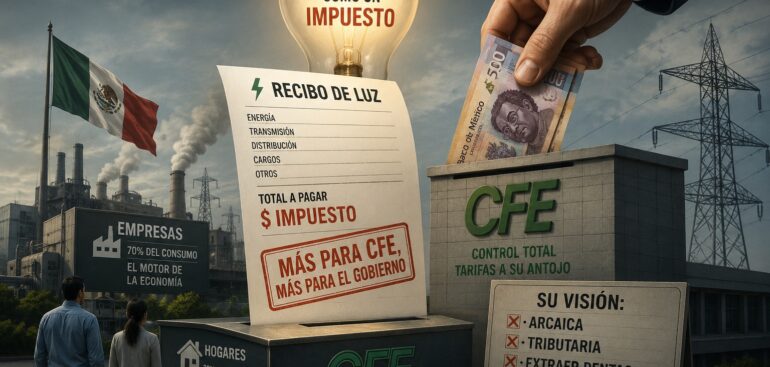
The Tax on Energy in the Future


In a very reductionist way, the origin of States implies a social contract where citizens choose to form a government that maintains order and fulfills other obligations for their benefit. To achieve this, human and material resources are required that must be covered with economic resources. Said in another way, governments need money to fulfill their tasks.

Governments have very limited ways of obtaining money. The most important and central one is taxes. That is, the imposition of participatory quotas on citizens, whether as individuals or as corporations, to maintain the actions of the government. The greater the tax burden, the more activities the government can develop optimally. However, it is a widely accepted consensus that citizens do not like paying taxes.

Another way in which governments can obtain income is through public debt, which is nothing other than obtaining money in advance that, in the end, will have to be paid with the government’s own income in the future. Debt is also very unpopular and dangerous because resources are committed in the long term to maintain payment to creditors.

In Mexico, however, an important part of public spending depends on two sources: oil revenues from the product of the sale of crude oil and taxes on fuels. As part of flexibility strategies, the Mexican government established a strategy based on establishing incentives when the price of gasoline was high, which were absorbed, in some way, by oil exports.

In recent years, the price of oil had remained relatively low —below 50 dollars per barrel— so, to maintain public revenues when the price of crude oil was low, the incentive to gasoline was reduced. This helped maintain the income not obtained from the sale of crude oil.

Consider that the use of oil causes serious problems related to climate change. Therefore, one of the logics of taxing fossil fuels is to dissuade their use in the long term to avoid their negative externalities or else to develop policies that allow correcting the consequences; for example, to adapt societies to climate change.

However, if one of the trends in the future is decarbonization, that would mean that taxes on fuels could disappear; with this, government revenues would decrease. Then, if fossil fuels are replaced by renewable sources of energy, how could said income be recovered?

Some proposals that have been debated in some countries regarding this topic are to tax, for example, electricity, batteries or even hydrogen. The logic behind these new levies would not be externalities, but collection itself.

Then, it would be possible that in the future, we see an IEPS on electricity, which by the way, this possibility has been established in the Constitution for some years. Perhaps, then, we could see taxes on the sun as in Spain some years ago or perhaps taxes on hydrogen as were recently approved in Argentina.

The challenge is that these taxes be progressive and that they do not condition the energy transition; at the same time that they allow governments to obtain the necessary resources for their continuous operation in the long term. For the moment, let this text serve to encourage the debate regarding the tax on energy in the future.


This article was originally published by Business Insider México.
Date: January 19, 2021
Original Link: https://businessinsider.mx/impuesto-energia-mexico-futuro-opinion-paul-sanchez-energia-circular/ [offline]
Archived Link: https://web.archive.org/web/20240222173025/https://businessinsider.mx/impuesto-energia-mexico-futuro-opinion-paul-sanchez-energia-circular/ [Archived]

The Race of the Artificial Suns


The energy transformation of our times advances, in a discreet way but at a good pace. There are several races that seek to break with the current limits of technologies; they can become the dominant standard of the global energy sector in the future.

Recently, GE launched the Haliade-X, a 13 MW mega wind turbine that makes the 2.5 MW turbines in La Venta, Oaxaca pale. We can see the same with technological companies that seek to integrate perovskite into solar panels to make them more efficient; batteries with greater duration, cheaper and more compact, among many other events. But a technological race to which we should pay special attention is that of artificial suns.

But what is an artificial sun?

In reality it is an apparatus that uses high-temperature plasma superconducting technology and high magnetic fields to approach atomic fusion, similar to what happens inside a sun. To achieve this, the fusion fuel must be heated to temperatures of more than 200 million degrees Kelvin, where matter becomes plasma.

Before fusion occurs, the electric repulsion of the atomic nucleus allows the atoms to come physically close enough to fuse. Fusion, then, promises the use of this reaction to provide virtually unlimited, safe energy with zero greenhouse gas emissions.

Some countries that are in this race for the development of their own artificial suns are South Korea and China. In South Korea it is developed at the Korean Center for Advanced Tokamak Superconductivity Research of the Korean Fusion Institute, with support from Seoul National University and Columbia University of the United States. On November 24, 2020, this project maintained the continuous operation of plasma with an ionic temperature of more than 100 million degrees Celsius for 20 seconds. These 20 seconds represent a record not reached by other projects.

For its part, the China National Nuclear Corporation developed the HL-2M Tokamak that operates at temperatures of 150 million degrees Celsius and is located in the city of Chengdu, within the province of Sichuan. However, this is only the largest and most stable of the artificial suns that are developed in the country.

Another country that also advances in this race is France through the International Thermonuclear Experimental Reactor that is being built in Cadarache within the European country. The development will have an estimated cost of 24,000 million euros and it is expected to obtain its first plasma by 2025. It is estimated that the temperature of this project could be between 100 and 150 million degrees Celsius.

Unlike atomic fission nuclear plants, which we addressed in the past, and which face difficulties to continue advancing and keep their costs low, the development of artificial suns that use nuclear fusion has a more promising future that could become an important piece in the competition to achieve clean, cheap and reliable energy.

This could be fundamental to achieve objective seven of the Sustainable Development Goals, which refers to achieving total coverage of electricity in the world through modern, affordable, renewable and reliable sources. A synergy that, in combination with solar, wind, hydrogen and storage developments, could be the energy pillars of a future without greenhouse gas emissions.


This article was originally published by Business Insider México.
Date: January 12, 2021
Original Link: https://businessinsider.mx/carrera-sol-artificial-paul-alejandro-sanchez-opinion-energia-circular/ [offline]
Archived Link: https://web.archive.org/web/20211027225428/https://businessinsider.mx/carrera-sol-artificial-paul-alejandro-sanchez-opinion-energia-circular/ [Archived]