Regarding the debacle generated by the regulatory changes of the Energy Regulatory Commission related to the measurement of energies in the national electric system, I believe it is important to remember that increasing clean energies in the energy matrix of our country is not an end in itself and the correct indicator is not the percentage of clean energies that the matrix has.
Clean energies are a means for the reduction of greenhouse gas emissions, for the decarbonization of the energy matrix and of the emissions intensity of the national electric system. The famous percentage of 35% is an indicator that was calculated with the purpose of determining how much clean energy proportional to the total was necessary to reduce a given volume of emissions.
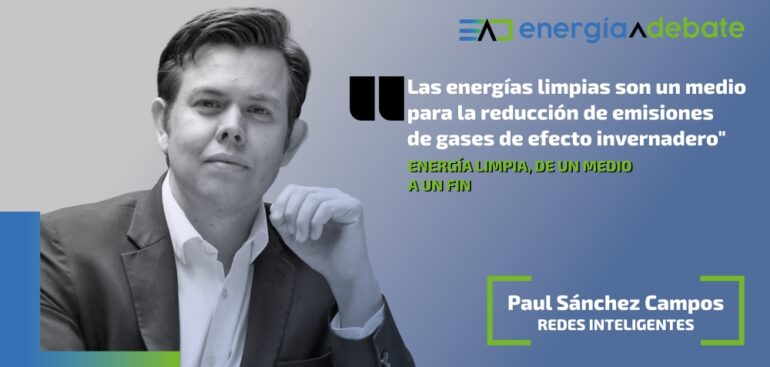
“Clean energies are a means for the reduction of greenhouse gas emissions.”
But let us go to the beginning. After the signing, ratification and entry into force of the Paris Agreement, the countries took on as a task to establish the nationally determined contributions. Within this framework, Mexico established a series of commitments for the 2020-2030 period within which the following stands out: “By 2024, 35% clean energy will be generated and by 2030, 43%, including renewable energy, cogeneration with natural gas and thermoelectric plants with CO2 capture.”
At that time, with data from 2013, Mexico’s greenhouse gas emissions for electric generation were 127 million tons of CO2 equivalent, so it was determined that by having clean energy generation of 35% by 2024, then the emissions that were linearly calculated could reach 177 million tons and decrease to around 130 million tons of CO2 equivalent.
The regulatory changes published by the Energy Regulatory Commission at the end of the month of May, which modified the methodologies for the measurement of clean energies to consider as clean energy that electricity produced by the gas steam of combined cycle plants that use natural gas, as long as it does not use additional fuel, derived in the update of the National Electric System Development Program (PRODESEN) 2023-2037.
In that sense, and according to said document, generation in 2022 presented a total of 31.2% clean energies, an amount that was obtained based on the methodological modifications of Agreement No. A/018/2023 of the CRE, published in the DOF on May 26, 2023. That is, because of the change in calculation from 2021 to 2022, the newly catalogued non-renewable clean energy increased by 7,502.1 GWh.
This recategorization, however, does a poor favor to the reduction of international commitments, since according to SEMARNAT data, from 2021 to 2022 the emissions factor of the National Electric System went from 0.423 tons per MWh to 0.435 tons per MWh. That is, more clean energy by reclassification with more emissions in the system.
If we consider the same information from PRODESEN 2023-2037, we can multiply the total generation of the system by the emissions intensity to obtain the absolute, that is, in 2021 when 328,598 GWh were generated, 138,997 kilo-tons of CO2 equivalent (ktCO2eq) would have been produced and in 2022 with 340,713 GWh, 148,210 ktCO2eq were emitted into the atmosphere. There is the paradox, since our emissions increased by almost 10,000 tons, at the same time that the participation rate of clean energy generation increased.
The moral of this story is that it is of no use to us to see the participation of clean energies as an end, since in themselves they should be a means for the reduction of greenhouse gas emissions. That is, even if tomorrow all gas were declared clean and 80% of the country’s energy, by decree, were clean, the reality would be that, ultimately, there are no emissions decreases, therefore, the country’s progress in fulfilling its climate objectives would continue to be highly insufficient.
This article was originally published by Energía a Debate.
Date: June 12, 2023
Link: https://energiaadebate.com/energias-limpias-de-un-medio-a-un-fin/ [Online]