Energy and Globalization

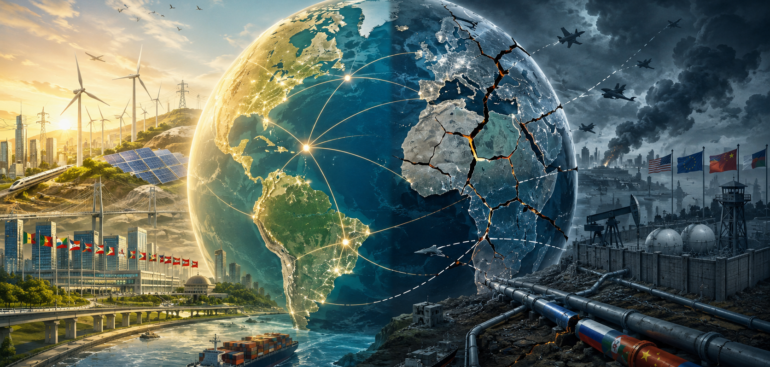
The energy transition planned and developed through international agreements is framed within the project of world order after the Cold War. This project, however, requires economic stability and global peace to foster international cooperation from an approach of mutual gains. Current events not only question the validity of the world order based on globalization, but also change the traditional paradigm of the energy transition that was gestated in this world order.

Let us go back in time three decades and return to the 1990s. In general, it could be said that this decade was marked by international optimism and economic stability, not to say an economic boom. The fall of the Berlin Wall, the disintegration of the Soviet Union and the end of the Cold War brought to an end the bipolar global order that governed the international community since the 1950s, which generated confidence to establish a new world order based on international free trade.

The appearance of regional blocs based on this new idea was a reflection of the possibility of a global world. The North American Free Trade Agreement created the largest commercial region in the world, while the Maastricht Treaty laid the foundations to advance in the integration of the European Union. The need to advance in the development of the less favored countries in Europe, Asia and Latin America was also recognized, leaving aside colonial aspirations of the countries but generating mechanisms for free trade.

“It was recognized, then, a threat to international security different from the traditional threats of the postwar period.”

With the threats of mutual global destruction due to a nuclear conflict behind, the international community began to concentrate on other social demands such as climate change. In the 1990s, the Earth Summit, the creation of the United Nations Framework Convention on Climate Change and the adoption of the Kyoto Protocol were pillars to guide the first global efforts of decarbonization. It was recognized, then, a threat to international security different from the traditional threats of the postwar period.

Facing the Russia and Ukraine conflict, the possibility of continuing under this model of multilateral cooperation in the future is questioned and it reveals the difficulty of maintaining cohesion to achieve common objectives, particularly in the energy and international decarbonization issue. It would seem that with this the stage of international optimism closes to return to that of multipolar political realism where each region defines its priorities based on its particular interests.


This article was originally published by Energía a Debate.
Date: Aplirl 5, 2022
Link: https://energiaadebate.com/la-energia-y-la-globalizacion/ [Online]
Energy Martyrs

Listening to the arguments of those who are in favor of the electric reform initiative in the open parliaments, I remembered the fable of the horse and the scorpion. The latter, wanting to cross a stream, asks the horse to help him cross. The horse, cautious as equines are, refuses, in the first instance, because the scorpion has a reputation for stinging and killing other animals.

The scorpion, skilled in his words, makes it evident to the horse that if he were to sting him and cause his death while they cross the stream, both would die, for which reason he would not do it. Thus, the horse agrees, the scorpion mounts him and begins his crossing. Halfway through, the horse feels the pain product of the sting.

While he becomes paralyzed and realizes his mistake, before dying the horse questions the scorpion as to why the sting, if now both would die. The scorpion, without philosophical or ontological arguments, without greater reason than instinct, replies only that this is his nature. Thus, both die, the horse and the scorpion.

Before knowing that from the Coordination of Corporate Communication of CFE those who participate in the Open Parliament representing the company have been instructed to concentrate on arguments that appeal to emotions because, from said Coordination, all this is a staging, it was evident that the arguments of those who are in favor of the electric reform initiative followed a certain pattern.

The most worrying of them is that there is not much talk, in the speeches of those who are in favor, about electricity costs going down, but rather all the arguments are concentrated on the supposed injustices that CFE has suffered since 1992, although much is focused on the 2013 reform.

“The central argument is how to increase electricity prices.”

Deep down, what is worrying are the veiled statements of the officials among which stand out that households must pay more for energy, that businesses must pay more for energy and that industrialists must pay more for energy. That is, the central argument is how to increase electricity prices.

To the vehement cry that the provision of the public service does not seek profits, there is indeed advocacy for continuing to increase the monetary flows that go to CFE either through the increase of transmission and distribution tariffs, limiting those who want to install panels on their roofs because they would represent less income for the company, and increasing the amount of energy that comes from CFE by reserving at least 54% of sales, even if the energy comes from more polluting and more expensive sources.

At no time has there been talk about how the cost of electricity can indeed go down, how to reduce labor liabilities, how to make processes efficient, how to integrate new and cheap technologies, how to empower the consumer, how to expand and strengthen the networks. None of that, only how to increase costs.

This is dangerous for the citizenry and harms us all, we are the horse whom the scorpion asks to help him cross, but halfway through, giving everything to CFE is going to cost us all, in price increases, pollutants, job losses and limitations to freedom. This is a reform that only favors CFE and its arguments are not in favor of the benefit of society and, in the end, it will harm us all, including CFE.

If the reform initiative is approved, we will be, then, energy martyrs to sustain the privileges of a company, the State company.


This article was originally published by Energía a Debate.
Date: February 8, 2022
Link: https://energiaadebate.com/martires-energeticos/ [Online]

Energy Inquisition

Mexico is living its full Energy Middle Ages. Of course I am not referring to the fact that we are using candles and whale oil, but if this trend continues, little would be missing for that. Not only because we live in an obscurantism in which official data on energy is hidden or buried in formats difficult to access and where new ideas are rejected, or because a system of energy vassalage is being implemented where we are all vassals, peasants or slaves of CFE; but because, in addition —and hand in hand with these two concepts—, we are in an Energy Inquisition orchestrated from the pulpits of public power and the State company.

For months, the federal government, starting with the president and the Secretariat of Energy, even leaders of the governing party, has taken on the task of winning the battle of the narrative that the electric reform initiative presented by the Head of the Executive himself is good for the people. Every day messages are positioned on television, radio, social networks, press conferences and in all possible media in defense of the initiative.

Also, week after week, some CFE official comes out to defend, either in the media or through press releases, the presidential proposal. In many cases showing the lack of technical knowledge of the electric sector, of the operational and financial management of the company or of legal practice itself.

However, the greatest problem is the very personal task that the direction of CFE and its social communication area have imposed on themselves by launching replies to any criticism or opinion published by experts, analysts, journalists or almost any person in any media outlet.

“…poor is the one who dares to question because he will end up in the virtual bonfire of CFE…”

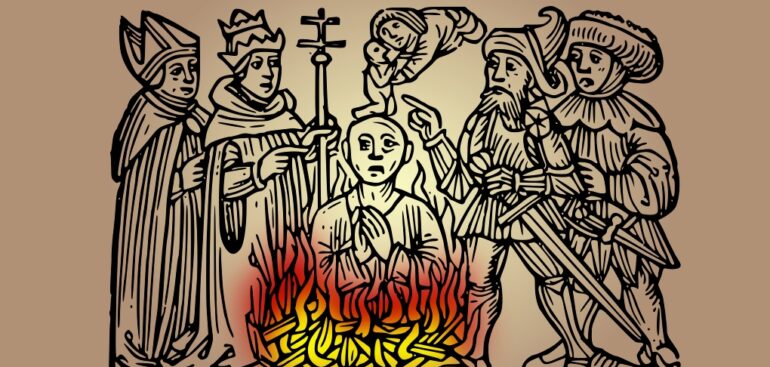
Like the Spanish Inquisition of the Middle Ages, the selective persecution carried out by CFE is brutal. Week after week they attack without solid arguments, without figures, without graphs and in a personal way anyone who dares to publish some critical thought regarding the areas of opportunity and negative aspects of the initiative. Public lynching does not take long, nor does the bonfire from power to burn the reputation of those who do not retract. The end, as I pointed out, is to win the narrative, whatever the cost.

The worst part, with all the machinery of the self-proclaimed most powerful company in Mexico, is that substantial arguments based on official figures or evidence are not presented, but rather disqualification and personal accusations are resorted to. Arguments sustained in ad hominem, ad baculum and ad populum fallacies wholesale.

If someone writes that the solution to solve climate problems, advance in the energy transition and optimize the country’s electric resources is not hydroelectric plants, CFE’s reply does not present data, but limits itself to branding the opinion as unfounded improvisation.

If someone shows them that the prices of electric energy from private plants are lower than those of CFE itself according to the data of the Energy Regulatory Commission itself, CFE limits itself to attacking the person and calling him a “lobbyist for private companies” and “enemy of the state company.”

Or if someone questions the hidden subsidies that CFE points out so much and of which it has not presented any proof based on the government’s official documents or statistics, they limit themselves to presenting some unsupported figure, pointed out again and again while waiting for it to become true, and accuse, without further proof or foundation, of promoting foreign interests.

The three examples are real and are a sample of a systemic phenomenon that occurs within the state electric company. It is, then, an energy inquisition that only seeks to give a reply without contributing to the discussion and debate, only to promote its particular interest and not that of society, so poor is the one who dares to question because he will end up in the virtual bonfire of CFE, since it now seems that the fundamental right to be protected is not free expression, but persecution.


This article was originally published by Energía a Debate.
Date: November 22, 2021
Link: https://energiaadebate.com/inquisicion-energetica/ [Online]