Digitalization: The Third D of the Energy Future


“Artificial intelligence is the new electricity”

–Andrew Ng

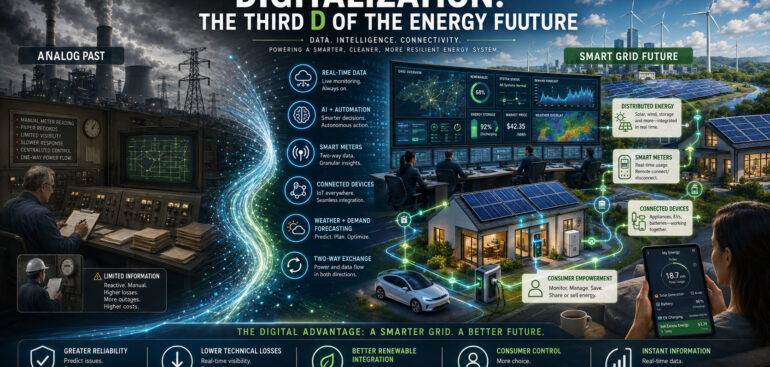
Digitalization is a topic very intimately linked to energy, but it is necessary to differentiate the exogenous and endogenous effects of this relationship. The exogenous effects of digitalization have more to do with the process of transformation of goods, products or processes. We have already addressed this: how currencies, records and books become chains of digital data that ultimately require electric energy. For example, we no longer use the Guía Roji to locate ourselves but Google Maps, and today’s students no longer need to have an illustrated encyclopedia but only access to Wikipedia.

To the above is added the digitalization of classic household appliances and other electronics that are not only automated, but also interconnected to internet networks, giving rise to the so-called internet of things. Beyond devices to which we have already become accustomed — computers, video game consoles and televisions —, this is also a trend in washing machines, refrigerators, air conditioners and even lighting in general; everything can be controlled through networks with a cellphone or another device connected to the same network of our house or even remotely through the internet.

But, on the other hand, there are endogenous effects of digitalization in the electric sector. Digitalization in turn implies a process of adaptation and rapid response to a changing environment such as greater integration of renewable energies and storage. Power plants and large consumption centers are interconnected through remote communication means, whether through conventional internet or satellite communications, in such a way that they can process information in real time and integrate it into a more robust network with intelligent dispatch.

Operators and intelligent networks connected in real time, together with generators and representatives of consumers and other marketers, would have the possibility of sending more precise data on generation and consumption, which would avoid the programming of excess generation and would reduce technical losses. Likewise, it could help a better integration of renewable energies in real time and also make precise information available to citizens instantly.

Accompanying this interconnectivity goes hand in hand artificial intelligence and data science for the development of algorithms and self-learning machines that allow integrating a large amount of data in real time, such as weather, prices, operations, demand and storage, which would grant greater reliability in the operation of the electric system.

Additionally, consumption centers integrate smart meters and distributed generation and storage systems that can interact continuously with the network and enable the sale of solar or stored energy; controllable demand and other products for the benefit of the network. In case of non-payment, it also allows remote disconnection and connection without crews of technical bodies or long waiting times.

A smart home could decide whether at a given moment of the day it uses energy from the grid to store it or to charge an electric car; or else sell energy from a distributed generation system or share it with its neighbors or, why not, donate its surplus to a nursing home, church or school.

Digitalization and interconnectivity are, undoubtedly, two of the topics that reflect the bright future of the electric sector, decentralized and decarbonized, and this enables something else: democratized. We will talk about that next week.


This article was originally published by Business Insider México.
Date: July 29, 2020
Original Link: https://businessinsider.mx/digitalizacion-futuro-energetico-energias-renovables-opinion-paul-alejandro-sanchez-energia-circular/ [offline]
Archived Link: https://web.archive.org/web/20201026073748/https://businessinsider.mx/digitalizacion-futuro-energetico-energias-renovables-opinion-paul-alejandro-sanchez-energia-circular/ [Archived]
Decentralization: The Second D of the Energy Future


I buy everything from ACME, they are the company I trust the most.

– Wile E. Coyote

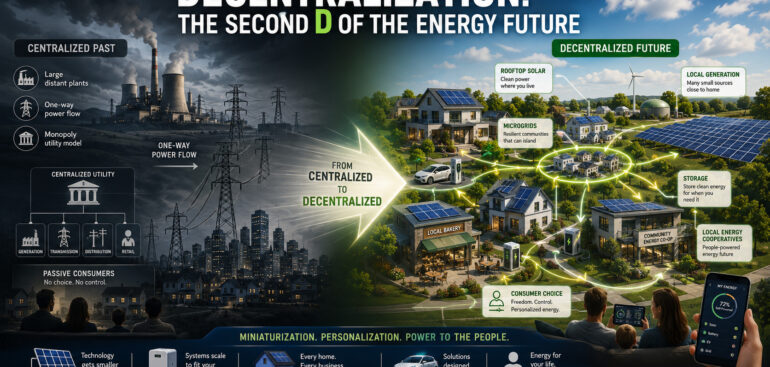
A fundamental aspect of the centralization that characterizes the electric sector lies in the maxim that says: “the bigger, the better.” For example, the bigger a generation plant is, the cheaper the energy is and therefore investment is made to take it from the distant production centers to the consumption centers. Right?

According to the logic of electric centralization, few large companies are required to make all the investments in generation and also in transmission and distribution lines to take energy to consumption centers. In such a way that production is centralized in vertically or horizontally integrated companies.

To illustrate the above, do you remember the Coyote from the “Looney Tunes” animated series? Created in 1949 with his co-star the Road Runner, in more than 70 years of life he has dedicated himself to the fruitless task of hunting the fast bird. For this he has used products from the ACME company, on which I will stop a little.

The ACME company is an acronym that means, translated into Spanish, “A Company that Makes Everything” and was the clear reflection of the companies of the 1950s. General Electric, for example, made the same irons, stoves, toasters, televisions, refrigerators; garbage burners, coal stoves, jet turbines and, in a futuristic vision, electric cars and their home chargers, to which we will dedicate an article later.

ACME, like GE, like the electric companies of old — known as utilities —, are part of that type of organization. However, since the 1970s this model entered into crisis and was replaced by smaller and more dynamic companies, reducing competitiveness to the large ACMEs. Eventually companies such as GE or the electric utilities began divesting assets and less competitive business branches.

If technological advance has taught us anything, it is the importance of miniaturization, individualization and personalization of products and services. Where before there was a landline telephone, now there is a smartphone for each member of the family. Why should it be different in the electric sector?

Smaller and more flexible plants are cheaper and easier to operate, they can be located near large consumption centers and, therefore, be more competitive than the large plants of old, and among these are solar plants. The development of small solar plants between 0.5 MW and up to 10 MW has grown everywhere in the world under that logic and has lowered the costs of electric energy in the most sophisticated markets.

But it does not end there. What is closer to the consumer than generating on their own roofs? The growth of solar panels on the roofs of residential, commercial, industrial users and even government offices has grown in those markets where regulation is more favorable, for example, California.

The energy future outlines a true trend of decentralization, users who take control of their consumption and require, increasingly less, energy from large production centers, cooperatives that create microgrids for self-consumption or entrepreneurs who use their land to sell energy near the cities.

And this is only the beginning, when electricity storage is economically viable, an important part of consumers will use increasingly less energy coming from large power plants.

Electric decentralization is synonymous with freedom and energy independence of consumers and goes hand in hand with the decarbonization of the sector. Undoubtedly, it will be a reality sooner rather than later.


This article was originally published by Business Insider México.
Date: July 22, 2020
Original Link: https://businessinsider.mx/descentralizacion-sector-electrico-energia-circular-paul-sanchez-opinion/ [offline]
Archived Link: https://web.archive.org/web/20210303081030/https://businessinsider.mx/descentralizacion-sector-electrico-energia-circular-paul-sanchez-opinion/ [Archived]

A New Generation of Consumers


“Many want the government to protect the consumer.

A more urgent problem is to protect the consumer from the government.”

– Milton Friedman

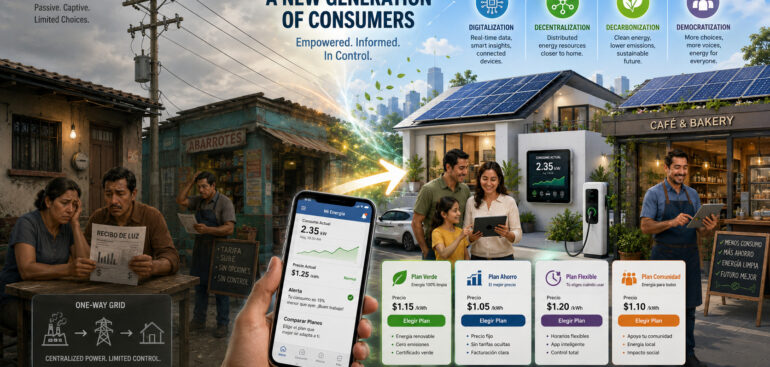
I dare say that in Mexico a consumer culture has not been developed in the energy sector, particularly in the electric sector; at least not at the level of domestic consumers or in small, family businesses and small shops. The citizens who make up the base of the pyramid of electric energy users.

Subsidies to energy prices together with a de facto monopoly in the sale of energy to small consumers, residential and commercial, have distorted the role of the consumer in the Mexican electric sector, which seems more like a captive taxpayer who has to obligatorily maintain the existence of operational and administrative inefficiencies of a market with a single electricity provider.

Small consumers do not have a real idea of their electricity consumption, nor of its real cost, and very few know the levels of energy efficiency of their household appliances and electronic devices.

In these days of confinement, most Mexican households have verified this situation in their electricity bills because by spending more time at home, our consumption has also increased in proportion. A person leaves a series running on TV while being on a video call with the lights on in an unoccupied room and charging a cellphone, laptop and tablet. Does it remind anyone of something?

While this happens in Mexico, in more mature markets such as the United States, Europe, Canada or Australia, a new generation of electricity consumers is being born that takes advantage of technological and social changes to have a more active role and assert its power. The four Ds that drive these changes are: Digitalization, Decentralization, Decarbonization and Democratization of energy. Which I will address in future columns.

This new generation of electricity consumers has indoor meters in their homes that allow them to observe the level of consumption in real time and the price of energy; they have connected smart devices that can regulate electricity consumption, for example in matters of indoor climate control; or schedule tasks, for example washing cycles, at 3:00 a.m. when the price of electricity is cheaper or dim the lights when no one is using them.

Additionally, there are applications for mobile devices that allow them to know consumption and establish limits and alarms, know the energy efficiency of the connected devices and observe their comparative degradation and know market prices. Some of them, more sophisticated, already integrate solar panels on their roofs, with storage systems and charging systems for electric cars, which are also storage systems.

But most importantly, these new-generation consumers have the right and control of choice in their hands. There are numerous electricity providers which offer electricity plans based on the needs of each of the users. There are plans for almost every type of consumer.

Whoever wants to consume 100% renewable energy and obtain their compliance certificate, or whoever wants to reduce their demand during peak hours in exchange for compensation; or whoever only operates on Saturdays and Sundays or at night, or whoever has their solar panels; all of them can obtain different offers from different providers with different prices and different characteristics.

For Mexicans to be able to enjoy an experience like that of mature markets, it is important that electric users become new-generation consumers who take control of choice and demand from rulers changes to move in that direction. We are still far away, but this evolution cannot be stopped.


This article was originally published by Business Insider México.
Date: July 8, 2020
Original Link: https://businessinsider.mx/una-nueva-generacion-de-consumidores-electricidad-opinion-paul-alejandro-sanchez-energia-circular/ [offline]
Archived Link: https://web.archive.org/web/20200805222332/https://businessinsider.mx/una-nueva-generacion-de-consumidores-electricidad-opinion-paul-alejandro-sanchez-energia-circular/ [Archived]