Hydrogen: The Japanese Bet


South of Tokyo, at the base of Mount Fuji, Toyota is developing the project called Woven City, a Hydrogen City. It is a prototype of a smart city whose source of energy would be hydrogen and which began its construction this year in February. But, beyond how Woven City works, there are many things to highlight about this project.

The first aspect is that the bet that government and companies in Japan are making on hydrogen is evident. If we analyze the country’s energy profile and its history, this makes much more sense than it seems at first glance. According to the United States Energy Information Administration, Japan’s energy consumption is composed of 87% fossil fuels among oil, natural gas and coal, with an additional 3% of nuclear energy. The remaining 10% are renewable energies, which include hydroelectric plants.

Japan’s great dependence on fossil fuels is accompanied by its lack of these natural resources, of which it has historically been a net importer. In 2019 alone, the country was the fourth largest importer of crude oil in the world, the largest importer of liquefied natural gas and the third importer of coal only behind China and India.

Japan’s bet is a true act of energy security and not in terms of dependence on the supply chain, but it is also a way to improve the country’s trade balance, which is affected by the strong costs of energy products and their volatility.

Another fundamental element is that it is the way in which Japan would promote the energy transition. Given its strong dependence on fossil fuels, the country has had difficulties reducing its greenhouse gas emissions. Solar and wind development has been limited for this reason; however, an aggressive plan to develop the energy transition using hydrogen could be much more feasible.

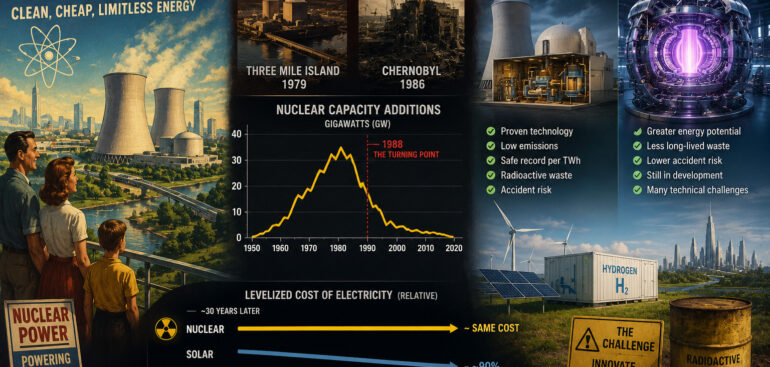
After the incident with the Nuclear Plant in Fukushima, Japan decided not to build new nuclear plants and to gradually close the existing ones. The same has happened recently when it announced that they would no longer build more coal plants. This implies that there could be greater investment in combined-cycle plants that use liquefied natural gas, which would be fundamental, in this first stage, for the development of gray or blue hydrogen, alongside green hydrogen.

A third aspect is that the bet addresses the issue of mobility. The greatest use of oil in the country is used for mobility, whether of private and collective automobiles, as well as for the transport of merchandise between cities. Although the train system is electrified and quite efficient, wheel transport continues to be important in the country.

Unlike other automakers, Japanese automakers, such as Toyota, Honda and Nissan, are betting on the standard of hydrogen vehicles more than on vehicles that use electricity from the grid. This implies that at least two other models are promoted besides the plug-in electric one: the fuel-cell model and the internal-combustion model with hydrogen. In such a way that we could say that the standard of the future of automobiles has not yet been decided.

Space is running out, but next week we will address more on this topic, expanding on Woven City, the smart city pilot that would use hydrogen as a source of energy.


This article was originally published by Business Insider México.
Date: June 10, 2021
Original Link: https://businessinsider.mx/hidrogeno-la-apuesta-japonesa-opinion-paul-sanchez-energia-circular/ [offline]
Archived Link: https://web.archive.org/web/20240528033643/https://businessinsider.mx/hidrogeno-la-apuesta-japonesa-opinion-paul-sanchez-energia-circular/ [Archived]

Circular Energy and Recycled CO2


The previous week we addressed the possibility of recycling CO2 captured directly from the air to give it other uses or, failing that, to store it. The advantage of this application is that it addresses emissions from mobile sources, mainly transport, and historical emissions, unlike the capture of emissions in fixed sources such as electricity generation plants or cement factories.

We concluded the circular effect that this measure would have in the energy sector, which generates almost 75% of global CO2 emissions. However, capturing the CO2 emitted by fixed and mobile sources related to the energy sector and transport also requires energy. And it is no small thing. Research published in the journal Nature indicates that, if massively implemented, direct air CO2 capture systems to capture all the remaining gas and gas in generation by 2100 would represent around 25% of total energy consumed.

In such a way that we have a circular energy problem; if the energy used to bring direct air CO2 capture machines to life comes from fossil sources, there would be a balance problem; more emissions would be produced while trying to control the existing ones.

What is the solution?

The expected answer comes in two ways. On the one hand, in the hope that technology advances and improves its energy efficiency per kilogram of captured CO2; on the other, in a world dominated by energy generation through renewable sources and storage.

In this way, solar and wind generation and thermal storage, in hydrogen cells or in gravity, could provide 100% decarbonized energy to turn on the CO2 capture machines. That would reduce the greenhouse effect caused by CO2 and other gases that cause global warming.

Consequently, the decrease of CO2 could lead to a lower effect of climate change and, in this way, to an energy and circular transition.

Of course, thinking about capturing CO2 directly from the air is a solution that allows a transition and management of historical and current emissions from fixed and mobile sources. In such a way that, accompanied by other transition efforts such as a revolution in renewables for generation and in mobility, both electric or through hydrogen, would allow thinking about a process of total decarbonization in this century.

Without a doubt, there is still much to think about developing this technology and adapting it throughout the world; however, this leads us to another situation: can we convert recycled CO2 and not only store it? We will talk about that next week.


This article was originally published by Business Insider México.
Date: April 6, 2021
Original Link: https://businessinsider.mx/energia-circular-y-co2-reciclado/ [offline]
Archived Link: https://web.archive.org/web/20240526060424/https://businessinsider.mx/energia-circular-y-co2-reciclado/ [Archived]

The Carbon Spheres


The answer to solving the problem of carbon emissions could be in carbon capture itself and the development of commercial applications for this byproduct, such as coal spheres or carbon spheres.

Carbon spheres have great potential that ranges from energy storage to pharmaceuticals and are produced at micro and nanoscales. If you remember your secondary school classes, the submultiples of the meter are: deci, centi, milli, micro, nano, pic, etcetera. If we normally use centimeters on measuring rulers, then they are much smaller scales.

At a microscopic level we can observe cells, bacteria, chromosomes and the first transistors of the 1970s. At the nano level we can observe genes, viruses, quantum dots and the increasingly smaller modern processors. At those scales, almost at a molecular level, are carbon spheres.

When these spheres have small pores of less than 1 nanometer, they have high potential to capture carbon at atmospheric level and at low pressures. Temperature is important since when they are at 0 degrees Celsius, they can capture 4 millimolars of carbon dioxide per gram. When the temperature increases to 25 degrees, the capture drops to 3 millimolars.

However, the optimal temperature for the formation of carbon spheres is 800 degrees Celsius. That is, an enormous amount of energy is required, which can have an increase in greenhouse gas emissions.

Like every incipient technology at this moment we could think that carbon spheres are expensive and impractical because they require processes that generate a strong carbon footprint. But it is a very important scientific and technological development because of the opportunities it opens in other areas.

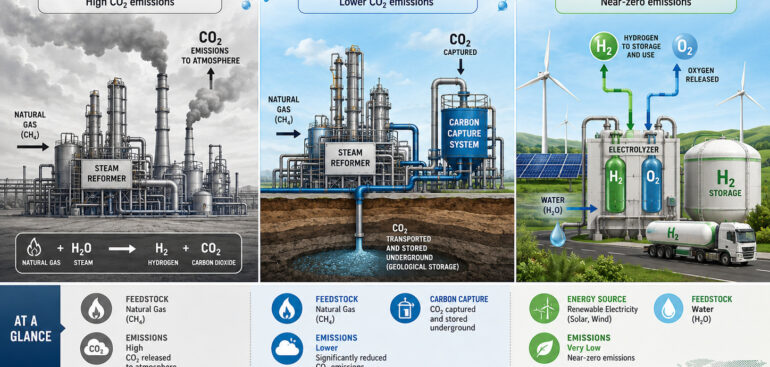
That is to say that the capture of carbon dioxide is not the only application that has been found for carbon spheres. They have the potential to help in the development of batteries for renewable energies since they are resistant and conduct electricity with a wide surface; also for the storage of hydrogen in the form of gas, which could generate new areas of interest for the green hydrogen cycle, storage and electric generation whose byproduct is water.

On the other hand, pharmaceutical applications have also been sought, for example, the use of carbon spheres as a means of transporting medicines because it has low cellular toxicity and a dosing profile with low pH. This could be key to transforming chemotherapy treatment, since it would rapidly distribute drugs against cancer in microenvironments, inhibiting the growth of cancerous tumors.

But leaving aside the pharmaceutical application, scientific development —which is still far from generating commercial applications— suggests that development would advance the low-carbon economy. The paradox, then, is that the answer to carbon emissions – and others such as methane emissions – could be in the research itself of carbon, particularly, carbon spheres.

One more example that scientific and technological progress can bring the solutions for a better future, for the development of a clean energy sector and for the construction of a low-carbon economy. Let us go, then, to search for the carbon spheres, which will be, without a doubt, a fantastic adventure.


This article was originally published by Business Insider México.
Date: March 10, 2021
Original Link: https://businessinsider.mx/esferas-carbon-carbono-opinion-energia-circular-paul-alejandro-sanchez/ [offline]
Archived Link: https://web.archive.org/web/20221207122752/https://businessinsider.mx/esferas-carbon-carbono-opinion-energia-circular-paul-alejandro-sanchez/ [Archived]