A Zero-Emissions Airplane


The transition to hydrogen will require the decisive action of the entire aviation ecosystem.

– Guillaume Faury

Let us take for granted, at least for the duration of this column, that the problem of urban-land mobility and its relationship with the use of fossil fuels is solved with the adoption of massive electromobility solutions that use renewable sources and storage. But how do we solve the problem of air and maritime transport? It seems that the answer is found in hydrogen.

For that reason, on this occasion we will focus on the recently announced hydrogen airplane that is under development by Airbus, with the idea of being launched in 2030.

This is the industry’s response to other alternatives that are not so viable at this moment of technological development, such as electric and solar airplanes and airplanes that use liquefied natural gas. Regarding the first ones, the problem is found precisely in the batteries and does not have to do with storage capacity, but rather with the amount of power they can release.

A conventional passenger airplane, for example the Boeing 737, would require a battery that could store and release more energy per unit of mass than what is available at this moment, without considering that the cost is too high to be competitive.

On the other hand, natural gas would seem to be an option that combines low prices, considering that the shale gas revolution in the United States has produced the cheapest natural gas in the world with high availability and lower greenhouse gas emissions compared with jet fuel.

The problem with natural gas as a replacement fuel is that it has lower calorific power than kerosene; in order to be used, it would have to be liquefied natural gas, which requires investments and modifications to the existing infrastructure; furthermore, since its density will be lower, it would require doubling the weight of the fuel to maintain the same travel distance. In sum, development in that area has remained for small airplanes and local trips.

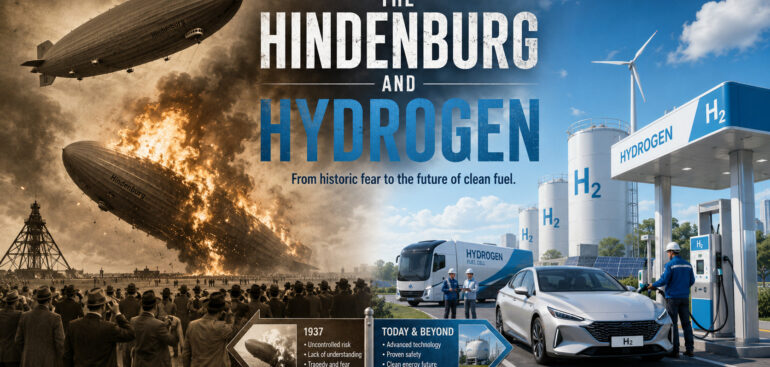
Considering this, the countries that are lined up in the development of the technologies that will define the future of energy see in hydrogen a possibility to transition toward airplanes with almost zero emissions and that could even be silent machines.

The concept is under development by Airbus and it is expected that it may be achieved by 2030, but the technology also has its challenges. The main one is discovering how to store liquid hydrogen during flight at very low temperatures and avoid the risks of the volatile fuel. However, in case of success, it would open a world of possibilities that could revolutionize the air transport industry and decrease the use of fossil sources.

As we pointed out some months ago, this may represent one of the most important applications within the hydrogen fever that motivates the most advanced research centers to take advantage of the opportunities to develop alternatives to continue with the advance of the energy transition even in the most difficult sectors such as aviation.

Ten years seem like a lot, but in scientific development and technological innovation it is a relatively short time that can charge us the bill as a country. With this panorama in mind, a public policy to promote science and technology for the energy sector was never more necessary. That would be a firm step toward true energy sovereignty sustained in the future and not in the old glories of the past.


This article was originally published by Business Insider México.
Date: October 7, 2020
Original Link: https://businessinsider.mx/avion-cero-emisiones-opinion-paul-sanchez-energia-circular/ [offline]
Archived Link: https://web.archive.org/web/20210515142831/https://businessinsider.mx/avion-cero-emisiones-opinion-paul-sanchez-energia-circular/ [Archived]
Circular Energy


We arrive at the homonymous column of this space which, since its beginning, has proposed the idea of returning to the future in matters of energy; that is, concentrating public, private and social efforts on analyzing the challenges of the energy sector of the future and potential solutions. We have talked about energy revolutions and what the future may bring us ahead, as well as climate changes and the garbage, and the waste associated with the energy sector.

Since the seventies, the need to implement a sustainable development model has been raised, one that takes into account the use of resources and their replacement rates, in such a way that, in the future, ecosystems can provide the natural resources necessary to give a growing population the means for its continued development.

In 2015, as part of a process to expand the Millennium Goals, the countries that make up the United Nations Organization developed a series of goals related to this topic; it represents the most ambitious expression that the international community has presented, called the Sustainable Development Goals, which is constituted as part of the agenda of the international community of 2030.

In this sense, one current that proposes an alternative solution for sustainable development is that of “circular economy.” It proposes that the international economic system can reduce waste and the intensive use of resources through the use, reuse, adaptation, repair, recycling and responsible final disposal of goods and products that form part of the supply structure that sustains the world economic base.

Given that world energy development is associated with effects on the environment and, in our times —particularly with climate change caused by greenhouse gas emissions into the atmosphere— it is key to understand how a concept such as “circular energy” can be articulated, incorporating some basic elements of the current into the energy sector.

In this way, even though the future of the energy sector is based on the development of renewable sources —such as solar and wind supported by traditional storage and electric cars, hydrogen for generation, storage or mobility, among other options— this technology needs resources and generates waste that requires special treatment.

Considering this, the challenge to overcome is how to reuse, adapt, repair, recycle or definitively and safely dispose of solar panels, traditional batteries and other clean technologies in such a way that they do not become —just as happened with cellphones and computers— digital garbage.

This is of vital importance, because one of the points established by the 2030 agenda is to guarantee universal access to affordable, reliable and modern energy services. This means that international efforts are aimed at ensuring that the inhabitants of the planet have energy; but also, that this comes from renewable sources and that they are affordable for everyone. This implies, consequently, that it is fundamental to establish mechanisms that lead to a better understanding of what is required to integrate the circular economy model into the energy sector.

This is a debate, which is still in its initial stage, and will be fundamental for the continuous development of the world and to create a green and sustainable energy sector. Otherwise, even with renewable energy sources, we could generate important impacts on the environment.


This article was originally published by Business Insider México.
Date: September 9, 2020
Original Link: https://businessinsider.mx/energia-circular-opinion-paul-sanchez-energia-futuro/ [offline]
Archived Link: https://web.archive.org/web/20240722041425/https://businessinsider.mx/energia-circular-opinion-paul-sanchez-energia-futuro/ [Archived]

Climate Changes


“The only constant is change”

-Heraclitus

Allow me to share a hypothesis with you: the history of humanity is the history of the search for and mastery of energy, and energy development always has an impact that changes the environment permanently and effects on the climate, that is, that produce climate changes, yes, like that in plural.

A few months ago I briefly shared with you about the first energy revolution in history: the Neolithic revolution where agriculture was disseminated, which allowed the settlement of the earliest cultures. As you can imagine, the increase in the quality and quantity of food allowed the increase of the population and the surplus of production even allowed animals to be domesticated, which in turn increased and diversified the available food, or seen in another way, available energy.

The energy-economic system of the world, until before the industrial revolution, was based on this form of energy, the energy of muscle and food to keep this force biologically functioning. Said in another way, this system was based on the capacity of human beings and beasts to perform work.

As the increase in population increased the demand for food, it was also required that the available land increase to also sustain the increase of the agricultural activities that would produce said food. Productive lands for agricultural activity did not appear naturally, but rather required the intervention of man.

To increase the amount of available land, historians propose that the first civilizations had to cut down and burn forests, jungles and even swamps in massive quantities to incorporate new lands into the productive process, reducing and, in some cases destroying, the biodiversity of the place.

Agricultural development not only changed the economic and social structures persistent until that moment, in fact, from my point of view, it is the basis of the slave-feudal economic model that required a large amount of labor to maintain the increase of available energy, of which we will speak next week, but it also changed the environment.

Ecosystems were modified and a first climate change was produced, which, although it pales in magnitude compared with that of our days directly related to the burning of fossil fuels, has had an effect that has lasted to the detriment of the Earth’s capacity to absorb CO2.

In exchange, the availability of the energy available to societies increased exponentially at a rate that was only surpassed with the advent of the industrial revolution. Paradoxically, it was after industrial development and technological innovation that agricultural development has been more productive in relation to the use of land, but it brought with it an increase in greenhouse gas emissions related to the burning of fossil fuels.

If we start from the fact that the garbage, refuse, residues and waste of a period of time are directly related to the dominant energy technology, it is also possible to point out that changes to the environment and to the climate are directly related to the available sources of energy. Under this perspective, we could ask ourselves whether the adoption of renewable energy sources, storage, hydrogen and all those energy sources of the future will solve climate changes forever or whether they will generate their own changes in the climate. For today we do not have that answer.


This article was originally published by Business Insider México.
Date: September 2, 2020
Original Link: https://businessinsider.mx/cambios-climaticos-opinion-paul-alejandro-sanchez-energia-circular/ [offline]
Archived Link: https://web.archive.org/web/20210306235244/https://businessinsider.mx/cambios-climaticos-opinion-paul-alejandro-sanchez-energia-circular/ [Archived]