The Waste of the Future


With this installment we finish the trilogy of waste and refuse related to the energy sector and dominant technologies. Two weeks ago we entered into the public crisis generated by horse waste —urine, manure and corpses— in the great cities of the late nineteenth century and early twentieth century; and the previous week, we analyzed how the growth in the use of fossil fuels in the world has produced an increase in greenhouse gas emissions related to climate change.

The problem caused by horse waste was solved when the automobile became widespread and the use of fossil fuels increased as the main source of transportation in the world. In the near future, the use of fossil sources could be replaced by the generation and storage of renewables, but that could also bring with it the energy waste of the future.

When the moment arrives, the proliferation of solar panels and batteries will be of such magnitude that, just like the horse in its time or greenhouse gas emissions, their final disposal can be a public problem of great importance.

Tons of waste of the future

Those solar panels that have been installed in recent years and those that are about to be installed could add up, by 2040, to 770,000 tons. This figure will increase as the roofs of the world become covered with solar panels; something that could be relatively fast, considering that the most important cities in the world have already begun to develop policies so that new constructions take advantage of their roofs to generate electric energy.

On the other hand, reaching the energy potential that renewable energies can release requires the development of storage on a large and small scale; this is batteries in generation plants, but also in buildings, businesses, industrial parks and homes.

Although there are many technological developments in the research and maturation stage, today conventional storage is carried out through lithium batteries that contain nickel, cobalt, aluminum, manganese and other components; in such a way that the batteries for cars and the electric sector that have been developed until now, and those that continue in the near future, can represent close to 7.8 million tons per year by 2040.

Given that one of the main costs of an electric car is the battery and its replacement can mean more expense —in terms of leveled investment— than buying another car, it is highly probable that the waste will not only be the batteries but the entire frame of the automobile, in addition to the fact that other legacy waste is not eliminated, such as tires.

A solution for the waste of the future

To solve these problems of the near future, two elements are required working jointly and in synergy:

  1. Policies for the final disposal of this waste in the present that responsibly address withdrawal in the future. That is, the responsibility of the producer and consumer must be extended in the present, in order to have the means of recycling, disposal and reuse in the future.
  2. Innovation and development to increase the useful life of technology and transition toward better methods of generation and storage of energy and transportation.

Who knows, perhaps another energy transition, there in the distant future, will allow us to change from solar generation, conventional storage and electric cars to a system based on hydrogen as an energy vector, storage and transportation. There is still a long way to go, but without a doubt, the energy future of the world will be surprising.


This article was originally published by Business Insider México.
Date: August 26, 2020
Original Link: https://businessinsider.mx/opinion-la-basura-del-futuro-paul-sanchez-columna-energia-circular/ [offline]
Archived Link: https://web.archive.org/web/20220928192656/https://businessinsider.mx/opinion-la-basura-del-futuro-paul-sanchez-columna-energia-circular/ [Archived]

The Hydrogen Rush

"Oh, Susanna, don't you cry for me,
I'm bound for the Lone Prairie with my pocket full of gold."
— Merrie Melodies (1942)

Have you ever wondered what the name of the San Francisco 49ers means? In 1848, a gold rush began in Northern California. Fortune seekers from the eastern and central United States started migrating to the state in search of instant wealth with relatively modest capital. Migration peaked in 1849, and those fortune seekers who arrived between 1848 and 1855 became known as the “forty-niners,” or simply the “49ers.”

A similar phenomenon occurred during the oil rush, the pursuit of “black gold,” in Pennsylvania between 1859 and 1880. Just as wild as the gold rush, the oil rush attracted countless fortune seekers, though only a few ultimately became truly wealthy. It was a gamble, but one with a relatively low cost of entry if fortune happened to smile upon you.

As a result, oil became the world’s primary energy source throughout much of the twentieth century. It powers national and international transportation systems, but it is also used to generate electricity and heat. However, recent efforts point toward a gradual reduction in oil use over the medium term and a transition toward hydrogen. This raises an important question: are we living through the hydrogen rush?

Transitions toward new forms of fuel are nothing new in the history of energy. In lighting, we moved from whale oil to kerosene and eventually to the electric light bulb. In electricity generation, we transitioned from small hydroelectric facilities to large coal-fired power plants, then to natural gas plants, and more recently to the rapid growth of renewable energy. In transportation, we progressed from animal-powered mobility to steam locomotives and eventually to petroleum-derived fuels such as gasoline, diesel, and fuel oil.

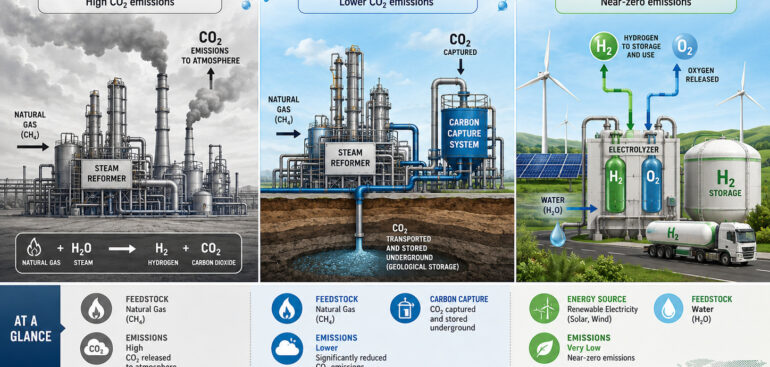
Hydrogen has become what nuclear energy once represented: a world of possibilities capable of transforming and unifying energy production and consumption over the long term. It offers potential not only for the generation of electricity and heat through hydrogen-powered plants, whose only byproduct is water, but also for energy storage and as a principal substitute fuel for passenger vehicles, freight transportation, light and heavy rail systems, and a variety of other high-value industrial applications.

Research centers in developed countries, a modern version of fortune seekers, are investing heavily in hydrogen-based technologies to solve many of the challenges associated with the energy transition. Just as the early gold and oil prospectors tested their luck and some ultimately generated wealth and regional development, the same may occur with the countries that are taking the first steps in the hydrogen rush.

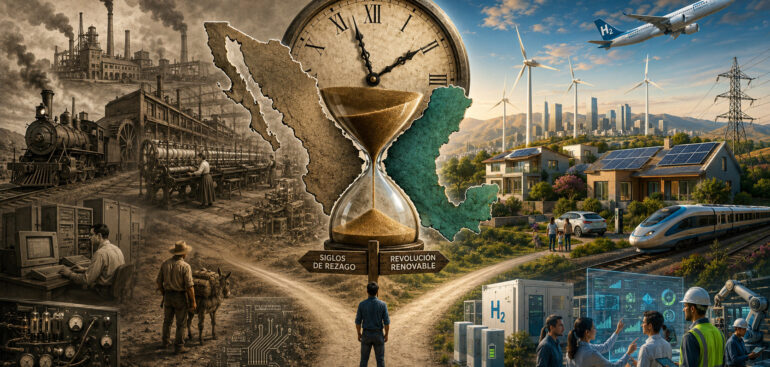
Mexico possesses significant potential to develop an industry based on hydrogen applications. The challenge is simply to look toward the future rather than cling to the past and its former glories. Otherwise, we may find ourselves purchasing technologies developed elsewhere, much like the fortune seekers who arrived too late to the gold rush and ended up enriching the merchants selling shovels and pickaxes.


This article was originally published by Business Insider México.
Date: June 17, 2020
Original Link: https://businessinsider.mx/la-fiebre-del-hidrogeno-energia-circular-paul-alejandro-sanchez-opinion/ [offline]
Archived Link: https://web.archive.org/web/20240725122203/https://businessinsider.mx/la-fiebre-del-hidrogeno-energia-circular-paul-alejandro-sanchez-opinion/ [Archived]

Back to the Future

“1.21 Gigawatts!

How am I going to be able to generate so much energy? It is impossible”

-Dr. Emmett Brown

Many of you will remember that classic film from 1985: “Back to the Future.” In the movie, Marty McFly convinces Dr. Brown (“The Doc”) that he traveled to the past thanks to a time machine that he built in the future, and that it ran out of battery. Finally, the Doc agrees to help Marty, but he faces a great problem: producing 1.21 Gigawatts (GW) to turn on the DeLorean.

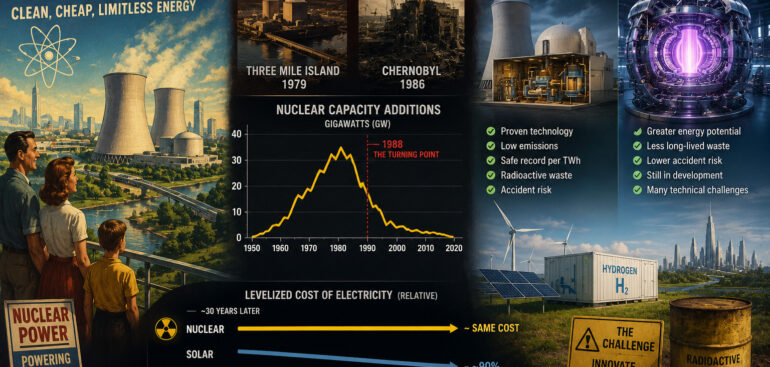
In the mid-1980s, nuclear energy seemed very promising; it was considered the future and the only way to put an end to fossil sources. Many things changed with the Chernobyl accident the following year, but that is another story.

Returning (to the future): it is 2020, they still do not sell plutonium in pharmacies and many things have changed in 35 years. The energy future is no longer deposited in nuclear energy, but in new-generation renewables — particularly solar and wind —, together with storage and hydrogen. That could be the winning combination of the future.

New-generation renewable energies have become the reference point of our present. Their spread is no longer part of a distant future difficult to see on the horizon, nor are their costs restrictive as before. Now they appear the same in homes as in businesses and industries, we can even see how large portions of agricultural lands are beginning to use their spaces to capture the sun.

If the Doc from “Back to the Future” had to generate 1.21 GW to turn on the DeLorean with current technology, could renewable energies in Mexico help him? Let us see.

According to figures from the Secretariat of Energy for the close of 2019, the installed capacity of electric energy in Mexico was 79.60 GW. This includes plants that use fossil sources, such as combined cycle plants that use natural gas, conventional thermal plants and internal combustion plants — which require diesel and fuel oil —; and coal-fired plants that, as their name indicates, use coal.

There is also hydroelectric energy, which uses dams and other bodies of water, and the nuclear energy that CFE operates in Laguna Verde, Veracruz. And, of course, we have solar photovoltaic, wind and geothermal energies.

The installed capacity of photovoltaic solar energy in Mexico represented 4.37% of the total in 2019, that is, a capacity of 3.4 GW. This means that if we used all the solar installations in the country at the same time for a couple of minutes, we could send Marty to the future almost three times. If we add wind energy, we can return him to the future eight times.

So great is Mexico’s renewable potential that on April 19 at noon, solar, wind, hydroelectric and geothermal energies together contributed 33% of the energy that was consumed at that moment. Solar energy alone contributed on average 1.76 Gigawatts every hour of the month, and I am sure that it is only the beginning.

In these times where renewable energies have become a topic of public debate, it is important to return to the future and leave the past behind. We can all design strategies that allow the country to achieve a true energy transition, integrate more renewable energies, reinforce electric networks, decentralize and digitalize consumption.

So, Doc, in the future they do not sell plutonium in pharmacies, but solar panels are very cheap and easy to get.


This article was originally published by Business Insider México.
Date: May 27, 2020
Original Link: https://businessinsider.mx/volver-al-futuro-energias-renovables-mexico-opinion-paul-alejandro-sanchez-energia-circular/

Archived in: https://web.archive.org/web/20200805220639/https://businessinsider.mx/volver-al-futuro-energias-renovables-mexico-opinion-paul-alejandro-sanchez-energia-circular/