
You read here first, a few months ago, that the hydrogen fever would begin in the world. From then to date we have heard notes such as Airbus’s bet to develop a zero-carbon-emissions airplane powered by hydrogen; using natural gas transportation and distribution pipelines to distribute hydrogen to industries, businesses and homes in the United Kingdom and the development of cargo transportation schemes that use hydrogen as a primary source of energy. Even the promotion of a National Hydrogen Association.
Surely hydrogen will continue giving something to talk about in the future and surely this column will continue following up on it. On this occasion, given the interest it has awakened, I want to touch on the three hydrogen production processes. To make the distinction simpler we can talk about gray hydrogen, blue hydrogen and green hydrogen.
Gray Hydrogen
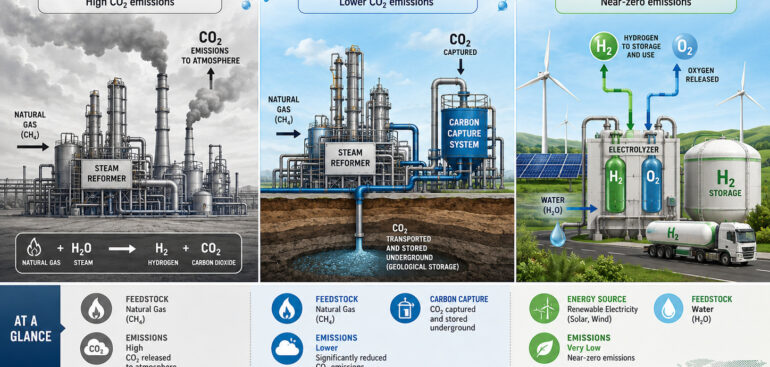
Gray hydrogen is that which is obtained from a process known as steam reforming using natural gas. Through a chemical reaction of methane with water, hydrogen and carbon monoxide are obtained.
Although it uses natural gas, given the greenhouse gas emissions, it is not considered in itself a clean technology. This is the dominant technology for hydrogen production in the world.
It is worth highlighting that when this process is used with coal it is considered brown hydrogen, but we will not analyze this for the moment.
Blue Hydrogen
For its part, blue hydrogen uses the same steam reforming process; however, it sequesters 90% of greenhouse gas emissions and stores them underground.
Since the production process is considered low in greenhouse gas emissions, it has been called low-carbon-emissions hydrogen. However, this process is costly, which has limited its adoption compared with gray or brown hydrogen.
Green Hydrogen
Lastly, green hydrogen is that which is obtained through the electrolysis process; it consists of using electricity to separate water molecules into hydrogen and oxygen.
Although this can be done with any source of electricity —from the grid, combined cycle or nuclear—, green hydrogen is considered to be that process that uses renewable energy sources such as photovoltaic solar and wind as the exclusive energy source for the electrolysis process.
Technological developments at the moment do not discriminate among the ways of producing gray, blue or green hydrogen, and concentrate on its usefulness to replace fossil sources of energy in industrial, commercial and residential processes; however, it is expected that in the future green hydrogen will be developed with greater intensity, particularly in places with intensive processes of renewable energy generation such as the coasts of the United Kingdom.
Implementing hydrogen in Mexico is a process that will require much evaluation and investments. Although we are closer to the development of gray hydrogen due to the abundant natural gas from the United States, the country has great potential to develop green hydrogen; skipping the phase of blue hydrogen and preparing for a future where it does not depend on energy inputs from abroad. That would be a decisive step for the country to consolidate its energy security.
This article was originally published by Business Insider México.
Date: November 4, 2020
Original Link: https://businessinsider.mx/hidrogeno-gris-azul-verde-opinion-energia-circular-paul-alejandro-sanchez/ [offline]
Archived Link: https://web.archive.org/web/20240413040223/https://businessinsider.mx/hidrogeno-gris-azul-verde-opinion-energia-circular-paul-alejandro-sanchez/ [Archived]