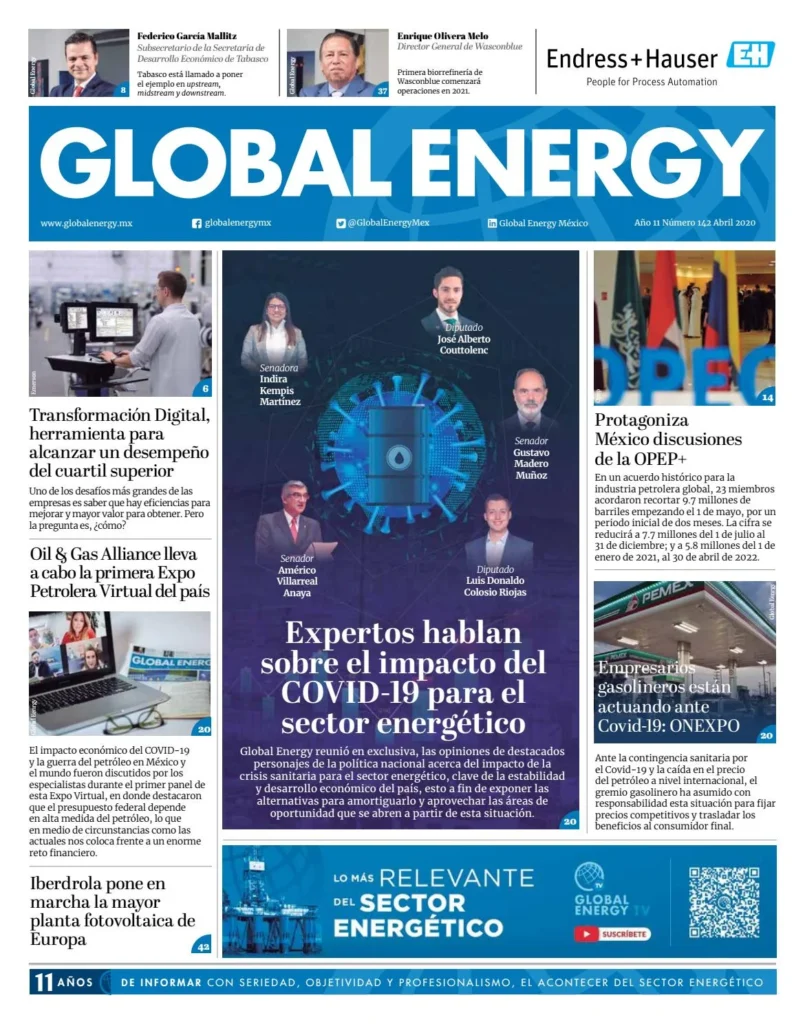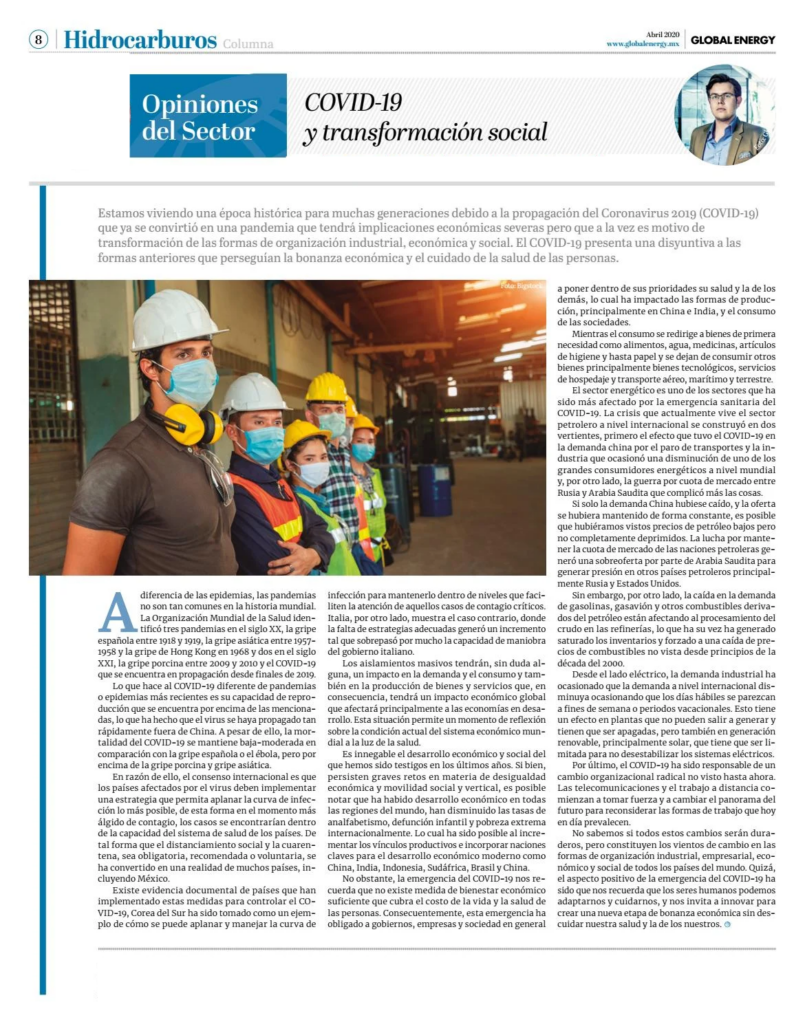
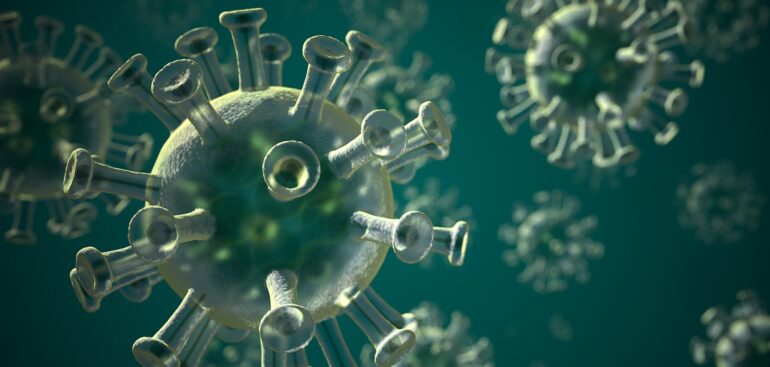
We are living through a historic moment for many generations due to the spread of Coronavirus Disease 2019 (COVID-19), which has already become a pandemic with severe economic implications while also serving as a catalyst for transforming industrial, economic, and social forms of organization. COVID-19 presents a challenge to previous models that sought to balance economic prosperity with the protection of human health.
Unlike epidemics, pandemics are not particularly common in world history. The World Health Organization identified three pandemics during the twentieth century: the Spanish flu between 1918 and 1919, the Asian flu between 1957 and 1958, and the Hong Kong flu in 1968; and two during the twenty-first century: the swine flu between 2009 and 2010 and COVID-19, which has been spreading since late 2019.
What makes COVID-19 different from more recent pandemics and epidemics is its reproductive capacity, which exceeds that of those previously mentioned. This has enabled the virus to spread rapidly beyond China. Despite this, COVID-19’s mortality rate remains low to moderate when compared to the Spanish flu or Ebola, though higher than that of swine flu and Asian flu.
For this reason, the international consensus has been that countries affected by the virus should implement strategies aimed at flattening the infection curve as much as possible. In this way, during the peak of contagion, the number of cases would remain within the capacity of national healthcare systems. As a result, social distancing and quarantine, whether mandatory, recommended, or voluntary, have become a reality in many countries, including Mexico.
There is documented evidence from countries that have implemented these measures to control COVID-19. South Korea has been regarded as an example of how the infection curve can be flattened and managed in order to maintain contagion levels that allow healthcare systems to adequately treat critical cases. Italy, on the other hand, illustrates the opposite scenario, where the absence of adequate strategies generated an increase in cases that far exceeded the Italian government’s capacity to respond.
Mass isolation measures will undoubtedly have an impact on demand and consumption, as well as on the production of goods and services, which in turn will have a global economic impact affecting developing economies most significantly. This situation provides an opportunity to reflect on the current condition of the global economic system in light of public health considerations.
The economic and social development witnessed in recent years is undeniable. Although significant challenges remain in terms of economic inequality and social mobility, it is possible to observe economic development across all regions of the world. Rates of illiteracy, infant mortality, and extreme poverty have declined internationally. This has been made possible through stronger productive linkages and the integration of key nations into the modern global economy, including China, India, Indonesia, South Africa, Brazil, and China.
Nevertheless, the emergence of COVID-19 reminds us that no measure of economic well-being can compensate for the value of human life and health. Consequently, this emergency has compelled governments, businesses, and society at large to prioritize both their own health and the health of others. This has affected production patterns, particularly in China and India, as well as consumption patterns around the world.
As consumption shifts toward essential goods such as food, water, medicines, hygiene products, and even toilet paper, other goods and services, particularly technology products, lodging services, and air, maritime, and land transportation, experience declining demand.
The energy sector is among the sectors most severely affected by the COVID-19 health emergency. The crisis currently facing the international oil industry developed along two fronts. First, COVID-19 affected Chinese demand due to transportation shutdowns and industrial slowdowns, reducing consumption from one of the world’s largest energy consumers. Second, the struggle for market share between Russia and Saudi Arabia further complicated the situation.
Had only Chinese demand declined while supply remained constant, oil prices would likely have fallen but not become completely depressed. The competition to preserve market share among oil-producing nations led Saudi Arabia to increase supply in order to exert pressure on other oil-producing countries, particularly Russia and the United States.
At the same time, declining demand for gasoline, jet fuel, and other petroleum products has affected refinery operations, resulting in inventory buildups and forcing a collapse in fuel prices not seen since the early 2000s.
From the electricity perspective, reduced industrial activity has caused international electricity demand to decline, making weekdays resemble weekends or holiday periods. This affects generating plants that can no longer operate and must be shut down, but it also impacts renewable generation, particularly solar power, which must sometimes be curtailed to avoid destabilizing electrical systems.
Finally, COVID-19 has been responsible for a radical organizational shift unlike anything seen before. Telecommunications and remote work have begun to gain momentum and reshape future expectations, prompting a reconsideration of prevailing workplace models.
We do not yet know whether all these changes will endure, but they represent winds of change in the industrial, business, economic, and social organization of countries around the world. Perhaps the positive aspect of the COVID-19 emergency is that it reminds us that human beings are capable of adapting and caring for one another, while encouraging us to innovate and create a new era of economic prosperity without neglecting our own health and the health of those around us.
This article was originally published by Global Energy, Volume 11, Issue 142, April 2020.
Date: April, 2020
Original: Printed Edition.
Archived Link: https://issuu.com/globalenergymx/docs/01-portada-ge142 [Archived]