"They were building a Ferrari for every launch when a Honda Accord could get the job done."
— Elon Musk
On May 30, the first private space mission was launched by Elon Musk’s company SpaceX, whose founder is also known for creating Tesla. The mission carried two NASA astronauts to the International Space Station. The launch represented the first crewed spaceflight departing from the United States in nearly a decade and what some have called the beginning of the private space race. Can this teach us any lessons for CFE?
It would be difficult to imagine an area more strategic for a government than its space program, particularly when that program is closely tied to an arms race and ideological competition under the perceived threats of the Cold War. As such, it received substantial public funding to sustain its operations.
However, in the more than sixty years since its creation, the world has changed dramatically in political, economic, and social terms. The welfare state model gradually became strained, largely because of the growing resources required to sustain government structures, and with it came a reduction in the amounts governments could devote to strategic sectors.
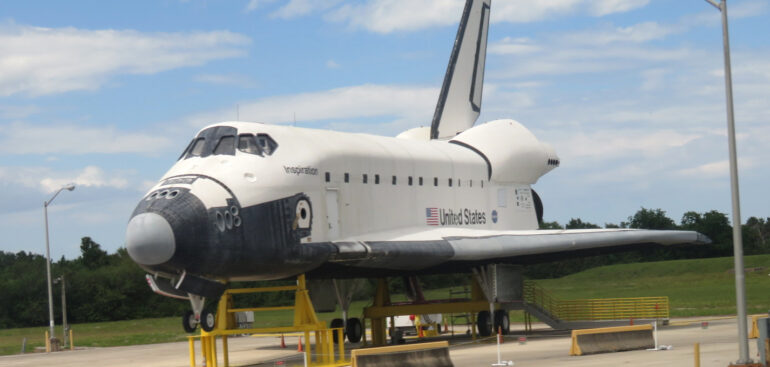
For example, NASA’s budget declined from USD 43.554 billion to USD 22.559 billion between 1966 and 2020 (in constant 2014 dollars). As a result, the agency was forced to retire some of its most emblematic programs, including the crewed Space Shuttle Program, which operated for thirty years from 1981 to 2011. In total, the program completed 135 missions, each with a launch cost ranging from USD 450 million to USD 1.5 billion.
The most important lesson from the launch of SpaceX’s Dragon spacecraft is that it cost approximately USD 50 million, only about 10 percent of the cost of the least expensive NASA Space Shuttle launch. As a result, NASA has decided to become one of the company’s principal customers for transporting astronauts into space.
In other words, NASA continues to carry out strategic activities in the space sector while concentrating its resources and efforts where they can generate the greatest value for the country and the world, such as the remote exploration of Mars, Jupiter, and Saturn, as well as deep-space exploration through its satellites. At the same time, it leaves launch services to private companies that can perform them more efficiently and at lower cost.
Viewed in this way, CFE could learn a great deal from NASA by focusing on the strategic areas that generate the highest value per unit of investment, such as transmission, distribution, telemetry, natural gas transportation, and natural gas marketing, among others. At the same time, it could move away from volumetric electricity generation targets that require the continued operation of expensive, inefficient, and highly polluting plants fueled by fuel oil and coal. Such generation could instead be replaced by low-cost clean and renewable energy, such as that procured through the Long-Term Electricity Auctions, benefiting both public health and consumers’ wallets.
Who knows? Instead of continuing to repair the legendary Volkswagen Beetle with a Ferrari-sized budget, perhaps CFE could accomplish far more for all Mexicans, just as NASA has done.
This article was originally published by Business Insider México.
Date: June 3, 2020
Original Link: https://businessinsider.mx/lo-que-la-nasa-puede-ensenarle-a-cfe-opinion-paul-alejandro-sanchez-energia-circular/ [offline]
Archived Link: https://web.archive.org/web/20210117004053/https://businessinsider.mx/lo-que-la-nasa-puede-ensenarle-a-cfe-opinion-paul-alejandro-sanchez-energia-circular/ [Archived]