Climate Changes


“The only constant is change”

-Heraclitus

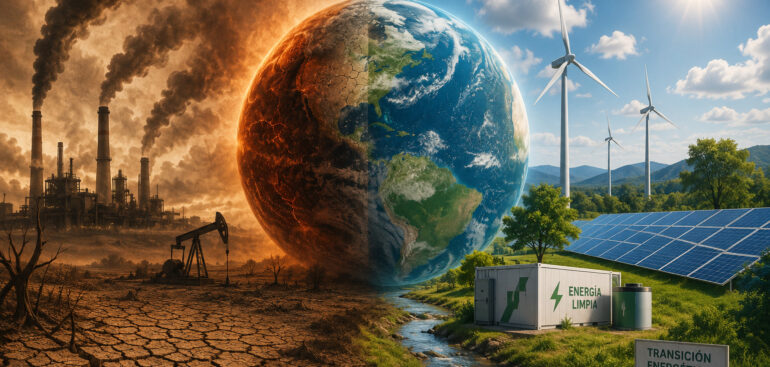
Allow me to share a hypothesis with you: the history of humanity is the history of the search for and mastery of energy, and energy development always has an impact that changes the environment permanently and effects on the climate, that is, that produce climate changes, yes, like that in plural.

A few months ago I briefly shared with you about the first energy revolution in history: the Neolithic revolution where agriculture was disseminated, which allowed the settlement of the earliest cultures. As you can imagine, the increase in the quality and quantity of food allowed the increase of the population and the surplus of production even allowed animals to be domesticated, which in turn increased and diversified the available food, or seen in another way, available energy.

The energy-economic system of the world, until before the industrial revolution, was based on this form of energy, the energy of muscle and food to keep this force biologically functioning. Said in another way, this system was based on the capacity of human beings and beasts to perform work.

As the increase in population increased the demand for food, it was also required that the available land increase to also sustain the increase of the agricultural activities that would produce said food. Productive lands for agricultural activity did not appear naturally, but rather required the intervention of man.

To increase the amount of available land, historians propose that the first civilizations had to cut down and burn forests, jungles and even swamps in massive quantities to incorporate new lands into the productive process, reducing and, in some cases destroying, the biodiversity of the place.

Agricultural development not only changed the economic and social structures persistent until that moment, in fact, from my point of view, it is the basis of the slave-feudal economic model that required a large amount of labor to maintain the increase of available energy, of which we will speak next week, but it also changed the environment.

Ecosystems were modified and a first climate change was produced, which, although it pales in magnitude compared with that of our days directly related to the burning of fossil fuels, has had an effect that has lasted to the detriment of the Earth’s capacity to absorb CO2.

In exchange, the availability of the energy available to societies increased exponentially at a rate that was only surpassed with the advent of the industrial revolution. Paradoxically, it was after industrial development and technological innovation that agricultural development has been more productive in relation to the use of land, but it brought with it an increase in greenhouse gas emissions related to the burning of fossil fuels.

If we start from the fact that the garbage, refuse, residues and waste of a period of time are directly related to the dominant energy technology, it is also possible to point out that changes to the environment and to the climate are directly related to the available sources of energy. Under this perspective, we could ask ourselves whether the adoption of renewable energy sources, storage, hydrogen and all those energy sources of the future will solve climate changes forever or whether they will generate their own changes in the climate. For today we do not have that answer.


This article was originally published by Business Insider México.
Date: September 2, 2020
Original Link: https://businessinsider.mx/cambios-climaticos-opinion-paul-alejandro-sanchez-energia-circular/ [offline]
Archived Link: https://web.archive.org/web/20210306235244/https://businessinsider.mx/cambios-climaticos-opinion-paul-alejandro-sanchez-energia-circular/ [Archived]
The Waste of the Future


With this installment we finish the trilogy of waste and refuse related to the energy sector and dominant technologies. Two weeks ago we entered into the public crisis generated by horse waste —urine, manure and corpses— in the great cities of the late nineteenth century and early twentieth century; and the previous week, we analyzed how the growth in the use of fossil fuels in the world has produced an increase in greenhouse gas emissions related to climate change.

The problem caused by horse waste was solved when the automobile became widespread and the use of fossil fuels increased as the main source of transportation in the world. In the near future, the use of fossil sources could be replaced by the generation and storage of renewables, but that could also bring with it the energy waste of the future.

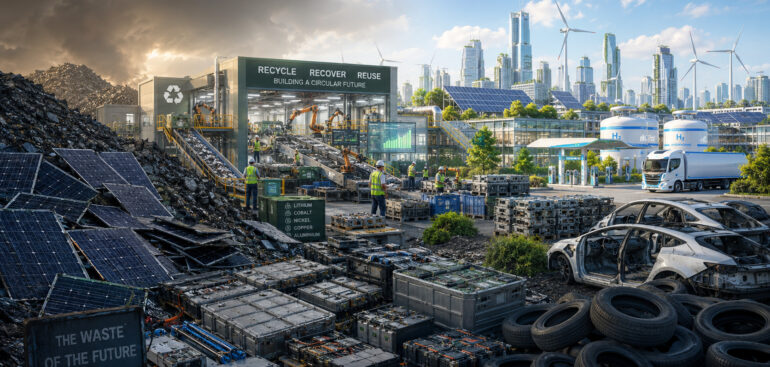
When the moment arrives, the proliferation of solar panels and batteries will be of such magnitude that, just like the horse in its time or greenhouse gas emissions, their final disposal can be a public problem of great importance.

Tons of waste of the future

Those solar panels that have been installed in recent years and those that are about to be installed could add up, by 2040, to 770,000 tons. This figure will increase as the roofs of the world become covered with solar panels; something that could be relatively fast, considering that the most important cities in the world have already begun to develop policies so that new constructions take advantage of their roofs to generate electric energy.

On the other hand, reaching the energy potential that renewable energies can release requires the development of storage on a large and small scale; this is batteries in generation plants, but also in buildings, businesses, industrial parks and homes.

Although there are many technological developments in the research and maturation stage, today conventional storage is carried out through lithium batteries that contain nickel, cobalt, aluminum, manganese and other components; in such a way that the batteries for cars and the electric sector that have been developed until now, and those that continue in the near future, can represent close to 7.8 million tons per year by 2040.

Given that one of the main costs of an electric car is the battery and its replacement can mean more expense —in terms of leveled investment— than buying another car, it is highly probable that the waste will not only be the batteries but the entire frame of the automobile, in addition to the fact that other legacy waste is not eliminated, such as tires.

A solution for the waste of the future

To solve these problems of the near future, two elements are required working jointly and in synergy:

  1. Policies for the final disposal of this waste in the present that responsibly address withdrawal in the future. That is, the responsibility of the producer and consumer must be extended in the present, in order to have the means of recycling, disposal and reuse in the future.
  2. Innovation and development to increase the useful life of technology and transition toward better methods of generation and storage of energy and transportation.

Who knows, perhaps another energy transition, there in the distant future, will allow us to change from solar generation, conventional storage and electric cars to a system based on hydrogen as an energy vector, storage and transportation. There is still a long way to go, but without a doubt, the energy future of the world will be surprising.


This article was originally published by Business Insider México.
Date: August 26, 2020
Original Link: https://businessinsider.mx/opinion-la-basura-del-futuro-paul-sanchez-columna-energia-circular/ [offline]
Archived Link: https://web.archive.org/web/20220928192656/https://businessinsider.mx/opinion-la-basura-del-futuro-paul-sanchez-columna-energia-circular/ [Archived]

Energy Poverty in Mexico: Where Do We Begin?

In recent years, the strong correlation between energy consumption and improvements in the quality of life of households and society as a whole has become increasingly evident. Today, children require computers, tablets, and internet access in order to receive an education that is both adequate and consistent with the standards of the modern world.

In this context, it is becoming increasingly common to hear about the importance of energy and the hardships faced by households and communities when they lack access to it, or when, despite having access, it is not affordable and optimal consumption creates additional challenges. So, where do we begin? Perhaps by first understanding what poverty is, how it is measured in Mexico, and what insights emerge when we combine these two elements.

Mexico was a pioneer in introducing the concept of multidimensional poverty in Latin America through the creation of the National Council for the Evaluation of Social Development Policy (CONEVAL) in 2006 and the implementation of the National Household Income and Expenditure Survey in 2008. Prior to that, poverty in Mexico was reported from a one-dimensional perspective that considered only the income of Mexican households and families.

At that time, three poverty lines were established to classify poverty nationwide: food poverty, capability poverty, and asset poverty. The first assessed whether income was sufficient to provide adequate nutrition; the second, whether it was sufficient to cover food needs as well as health and education requirements; and the third, whether it could also cover expenses related to clothing, housing, and transportation. When income was insufficient, households were considered to experience food, capability, or asset deprivation.

However, beginning in 2008, poverty in Mexico started to be measured using a multidimensional approach that considers the place where people live, their income level, and the availability of infrastructure, services, and basic rights to which a given family has access. Regarding income, CONEVAL established two poverty thresholds: moderate poverty and extreme poverty.

For extreme poverty, the minimum monthly income thresholds for June 2020 were established at MXN 1,640.00 and MXN 1,170.92 for urban and rural localities, respectively. Income below these levels is considered extreme income poverty. For the same period, the minimum monthly income thresholds required to avoid moderate income poverty were established at MXN 3,202.64 and MXN 2,086.57 for urban and rural localities, respectively.

Nevertheless, multidimensional poverty, as noted above, goes beyond income and includes the enjoyment of six basic rights or services: education, health, social security, food, housing, and access to basic services. Access to basic services includes water, sanitation, electricity, and cooking fuels within the household.

Therefore, in Mexico, a household is not considered poor if and only if its income is above the moderate poverty line and it experiences no deprivation in any of the six social dimensions mentioned above. If it has at least one deprivation but its income remains above the poverty line, it is considered a non-poor household with social deprivations.

Households experiencing moderate multidimensional poverty are those whose income falls below the moderate poverty line and who experience at least one social deprivation, while households in extreme multidimensional poverty are those whose income falls below the extreme poverty line and who experience at least three social deprivations.

When considering poverty and its relationship with energy, several related concepts emerge: energy poverty, energy access, energy marginalization, and energy vulnerability. Each of these concepts is related to the measurement of multidimensional poverty in Mexico.

For example, a family whose income exceeds the moderate poverty line may decide to move to a rural area located far from the electrical grid. As a result, it becomes a household experiencing deprivation because it lacks access to energy. It has the ability to pay, but it does not have access to energy. Consequently, lack of access to energy does not necessarily imply energy poverty.

In contrast, a household may have access to energy, but the cost of electricity, gas, and gasoline consumption may compromise other essential needs such as food, health care, education, or clothing. As a result, the household may choose to consume less energy than is optimal. In such cases, we may be witnessing energy vulnerability in terms of household economics or thermal comfort.

On the other hand, what happens when a household not only lacks sufficient income to support optimal electricity consumption but also lacks access to energy altogether? One could argue that such a situation goes beyond energy vulnerability and may be considered energy marginalization, as households in these circumstances are often forced to migrate from their communities of origin.

Perhaps we could begin by understanding energy poverty as a condition in which there is a lack, deficiency, or insufficiency of economic, technical, or social conditions necessary to access or maintain an optimal level of energy consumption that satisfies the essential needs for a household’s subsistence, development, and comfort.

Surely, especially if they are experts in the field, readers may find this definition insufficient for a topic of such importance to modern societies. Nevertheless, I believe it serves as a useful starting point for reflection and for encouraging debate on how to understand and assess energy poverty in Mexico and around the world. Perhaps in the future we will have the opportunity to explore this issue in greater depth here. For now, thank you for reading and sharing.

This article was originally published in Pensamiento Libre Magazine. ISSN 2007-5685.
Date: August 24, 2020
Original Link: https://www.revistapensamientolibre.com/single-post/2020/08/24/pobreza-energ%C3%A9tica-por-d%C3%B3nde-empezar [offline]
Archived Link: https://web.archive.org/web/20210613144455/https://www.revistapensamientolibre.com/single-post/2020/08/24/pobreza-energ%C3%A9tica-por-d%C3%B3nde-empezar [Archived]