
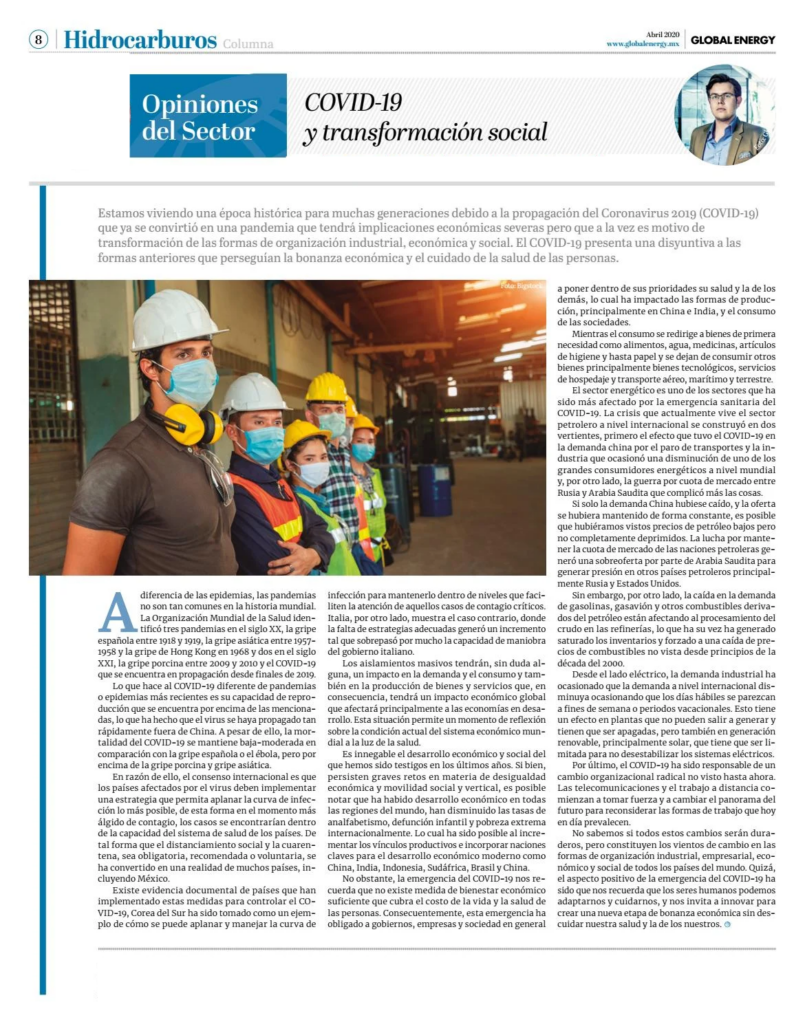
COVID-19 and Social Transformation

We are living through a historic moment for many generations due to the spread of Coronavirus Disease 2019 (COVID-19), which has already become a pandemic with severe economic implications while also serving as a catalyst for transforming industrial, economic, and social forms of organization. COVID-19 presents a challenge to previous models that sought to balance economic prosperity with the protection of human health.

Unlike epidemics, pandemics are not particularly common in world history. The World Health Organization identified three pandemics during the twentieth century: the Spanish flu between 1918 and 1919, the Asian flu between 1957 and 1958, and the Hong Kong flu in 1968; and two during the twenty-first century: the swine flu between 2009 and 2010 and COVID-19, which has been spreading since late 2019.

What makes COVID-19 different from more recent pandemics and epidemics is its reproductive capacity, which exceeds that of those previously mentioned. This has enabled the virus to spread rapidly beyond China. Despite this, COVID-19’s mortality rate remains low to moderate when compared to the Spanish flu or Ebola, though higher than that of swine flu and Asian flu.

For this reason, the international consensus has been that countries affected by the virus should implement strategies aimed at flattening the infection curve as much as possible. In this way, during the peak of contagion, the number of cases would remain within the capacity of national healthcare systems. As a result, social distancing and quarantine, whether mandatory, recommended, or voluntary, have become a reality in many countries, including Mexico.

There is documented evidence from countries that have implemented these measures to control COVID-19. South Korea has been regarded as an example of how the infection curve can be flattened and managed in order to maintain contagion levels that allow healthcare systems to adequately treat critical cases. Italy, on the other hand, illustrates the opposite scenario, where the absence of adequate strategies generated an increase in cases that far exceeded the Italian government’s capacity to respond.

Mass isolation measures will undoubtedly have an impact on demand and consumption, as well as on the production of goods and services, which in turn will have a global economic impact affecting developing economies most significantly. This situation provides an opportunity to reflect on the current condition of the global economic system in light of public health considerations.

The economic and social development witnessed in recent years is undeniable. Although significant challenges remain in terms of economic inequality and social mobility, it is possible to observe economic development across all regions of the world. Rates of illiteracy, infant mortality, and extreme poverty have declined internationally. This has been made possible through stronger productive linkages and the integration of key nations into the modern global economy, including China, India, Indonesia, South Africa, Brazil, and China.

Nevertheless, the emergence of COVID-19 reminds us that no measure of economic well-being can compensate for the value of human life and health. Consequently, this emergency has compelled governments, businesses, and society at large to prioritize both their own health and the health of others. This has affected production patterns, particularly in China and India, as well as consumption patterns around the world.

As consumption shifts toward essential goods such as food, water, medicines, hygiene products, and even toilet paper, other goods and services, particularly technology products, lodging services, and air, maritime, and land transportation, experience declining demand.

The energy sector is among the sectors most severely affected by the COVID-19 health emergency. The crisis currently facing the international oil industry developed along two fronts. First, COVID-19 affected Chinese demand due to transportation shutdowns and industrial slowdowns, reducing consumption from one of the world’s largest energy consumers. Second, the struggle for market share between Russia and Saudi Arabia further complicated the situation.

Had only Chinese demand declined while supply remained constant, oil prices would likely have fallen but not become completely depressed. The competition to preserve market share among oil-producing nations led Saudi Arabia to increase supply in order to exert pressure on other oil-producing countries, particularly Russia and the United States.

At the same time, declining demand for gasoline, jet fuel, and other petroleum products has affected refinery operations, resulting in inventory buildups and forcing a collapse in fuel prices not seen since the early 2000s.

From the electricity perspective, reduced industrial activity has caused international electricity demand to decline, making weekdays resemble weekends or holiday periods. This affects generating plants that can no longer operate and must be shut down, but it also impacts renewable generation, particularly solar power, which must sometimes be curtailed to avoid destabilizing electrical systems.

Finally, COVID-19 has been responsible for a radical organizational shift unlike anything seen before. Telecommunications and remote work have begun to gain momentum and reshape future expectations, prompting a reconsideration of prevailing workplace models.

We do not yet know whether all these changes will endure, but they represent winds of change in the industrial, business, economic, and social organization of countries around the world. Perhaps the positive aspect of the COVID-19 emergency is that it reminds us that human beings are capable of adapting and caring for one another, while encouraging us to innovate and create a new era of economic prosperity without neglecting our own health and the health of those around us.

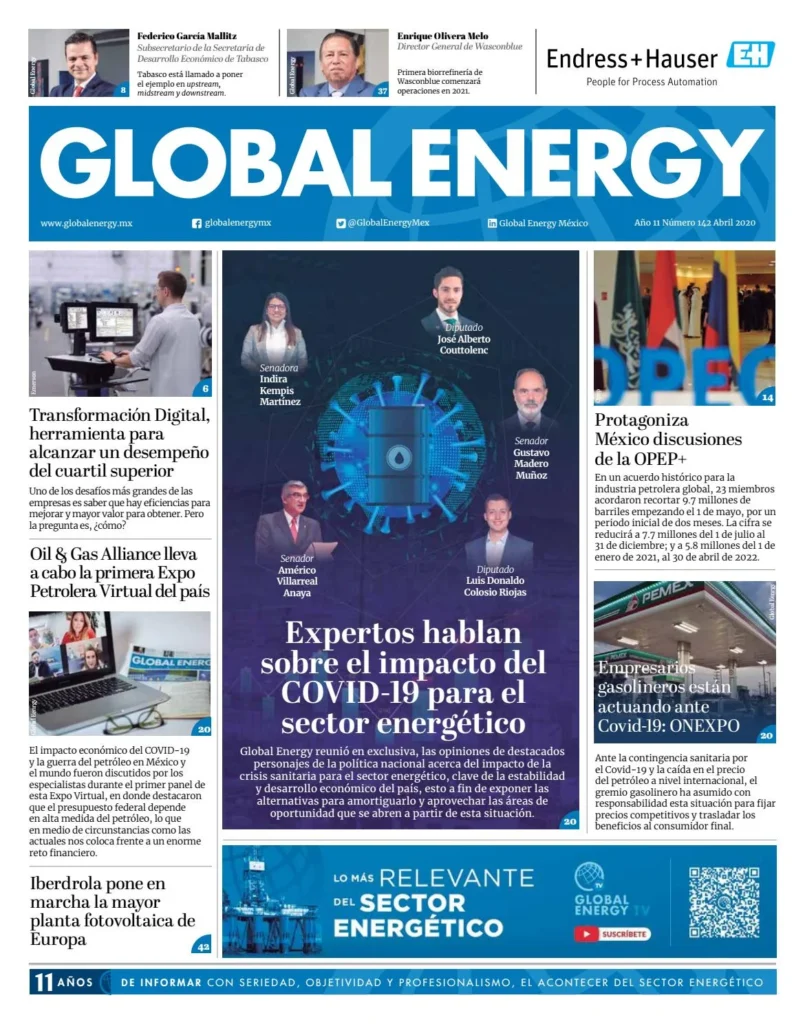
This article was originally published by Global Energy, Volume 11, Issue 142, April 2020.
Date: April, 2020
Original: Printed Edition.
Archived Link: https://issuu.com/globalenergymx/docs/01-portada-ge142 [Archived]
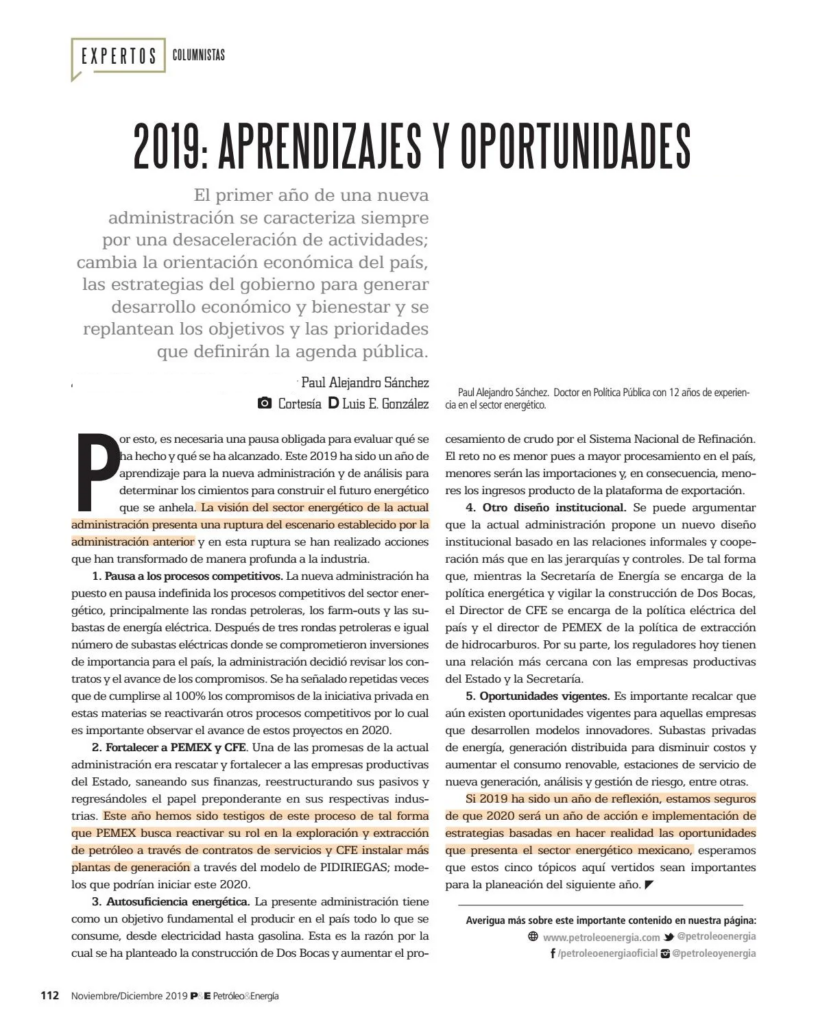
2019: Lessons and Opportunities

The first year of a new administration is always characterized by a slowdown in activity. The country’s economic direction changes, government strategies for generating economic development and well-being are reoriented, and the objectives and priorities that will define the public agenda are reconsidered.

For this reason, a necessary pause is required to evaluate what has been done and what has been achieved. This 2019 has been a year of learning for the new administration and of analysis aimed at determining the foundations upon which the desired energy future can be built. The current administration’s vision for the energy sector represents a departure from the framework established by the previous administration, and within this break a series of actions have been undertaken that have profoundly transformed the industry.

1. Pause in Competitive Processes. The new administration has placed the energy sector’s competitive processes on an indefinite hold, particularly oil bidding rounds, farm-outs, and electricity auctions. Following three oil bidding rounds and an equal number of electricity auctions that committed significant investments for the country, the administration decided to review the contracts and the progress made on those commitments. It has repeatedly stated that if private sector commitments in these areas are fulfilled in full, additional competitive processes will be reactivated. Therefore, it will be important to monitor the progress of these projects during 2020.

2. Strengthening PEMEX and CFE. One of the current administration’s promises was to rescue and strengthen the state-owned productive enterprises by improving their financial position, restructuring their liabilities, and restoring their leading role within their respective industries. This year we have witnessed that process unfold. PEMEX is seeking to revive its role in oil exploration and production through service contracts, while CFE aims to install additional generation capacity through the PIDIREGAS model. Both approaches could begin to materialize in 2020.

3. Energy Self-Sufficiency. A fundamental objective of the current administration is to produce domestically everything the country consumes, from electricity to gasoline. This objective explains the proposed construction of the Dos Bocas refinery and efforts to increase crude oil processing through the National Refining System. The challenge is significant. Greater domestic processing implies lower imports and, consequently, lower revenues derived from the country’s export platform.

4. A Different Institutional Design. It can be argued that the current administration proposes a new institutional design based more on informal relationships and cooperation than on hierarchies and controls. Under this approach, the Ministry of Energy is responsible for energy policy and overseeing the construction of Dos Bocas, while the CEO of CFE effectively leads the country’s electricity policy and the CEO of PEMEX leads hydrocarbon production policy. Regulators, for their part, now maintain a closer relationship with the state-owned productive enterprises and the Ministry.

5. Opportunities Remain. It is important to emphasize that opportunities still exist for companies capable of developing innovative business models. Private energy auctions, distributed generation projects aimed at reducing costs and increasing renewable energy consumption, next-generation service stations, and risk analysis and management services are just a few examples.

If 2019 has been a year of reflection, we are confident that 2020 will be a year of action and implementation, focused on turning the opportunities offered by Mexico’s energy sector into reality. We hope that the five topics discussed here will serve as useful considerations for planning the year ahead.


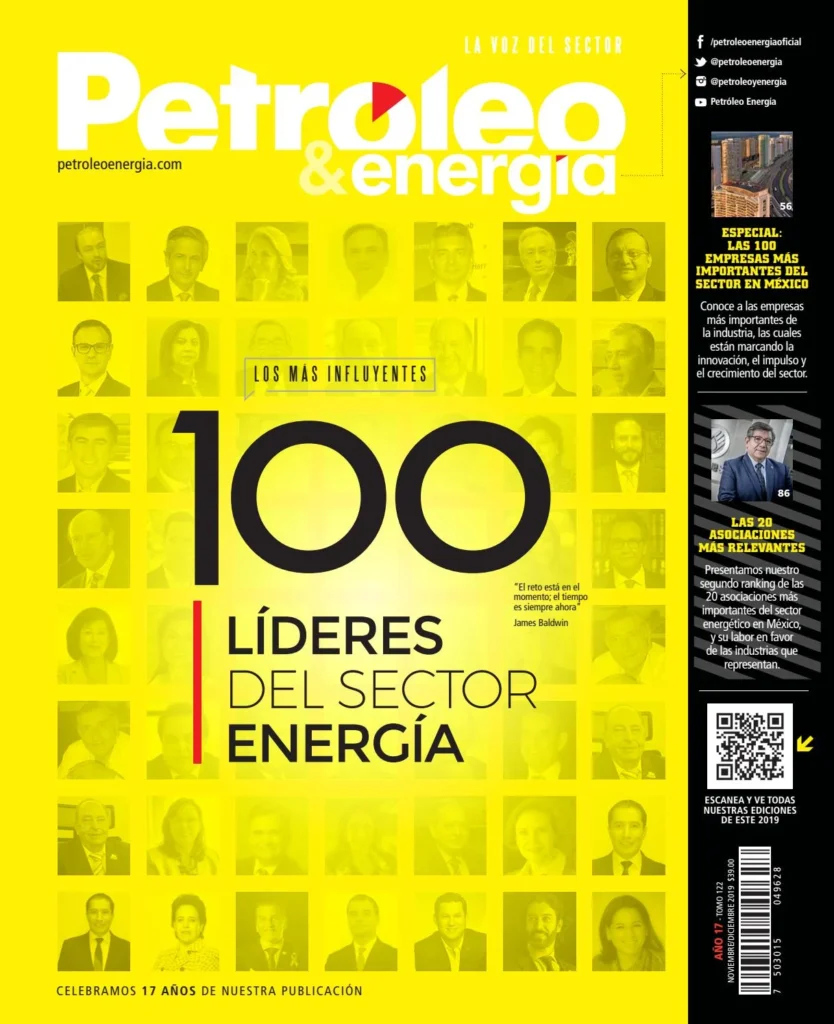
This article was originally published by Petróleo y Energía, Volume 17, Issue 112, November–December 2019.
Date: December, 2019
Original: Printed Edition.
Archived Link: https://issuu.com/revistapetroleoenergia/docs/petrus_122-noviembre-diciembre [Archived]

Access to Energy and Human Rights After Mexico’s Energy Reform

We are living through an opportune moment to address the issue of access to energy from a human rights perspective.

Imagine un día sin energía. Hasta los elementos más básicos del día con día de todas las personas se verían impactados. La capacidad de movilidad se limitaría en gran medida; los hospitales, escuelas y oficinas verían disminuidas sus capacidades para llevar a cabo sus actividades; la comunicación no podría llevarse en tiempo real a falta de telefónos celulares, internet y redes sociales; y en los hogares no habría forma de tener los servicios básicos como iluminación y gas para cocinar.

Al imaginar este cuadro es posible señalar que las sociedades modernas no podrían vivir sin energía, al menos no como las conocemos hoy en día. Esto afectaría también otros derechos de las sociedades tales como la vivienda digna, la salud, la educación e incluso la alimentación. En este sentido, es evidente que la implementación y progresividad de estos derechos depende de que se garantice el acceso a la energía.

No obstante, pocas veces este tema de la energía se incluye en el marco de los derechos humanos. Si se considera esto en conjunto con la importancia social, económica y cultural de la energía, parece contradictorio que pocas veces se aborde el tema en las discusiones que tienen lugar dentro del marco de los derechos humanos.

En México, vivimos un momento propicio para abordar el tema del acceso a la energía con enfoque de derechos humanos. La Reforma Constitucional en materia de derechos humanos publicada en 2011, representó un enorme avance legal en la evolución de estas esenciales prerrogativas, al reconocer en el más alto nivel de la jerarquía normativa los principios que favorecen la consolidación de una sociedad más justa.

Este enorme paso que se da en la letra de la ley, debe traducirse, sin lugar a dudas, en el mediano y largo plazo en beneficios directos para los individuos y grupos, que impacten directamente en el mejoramiento de la calidad de vida de la sociedad y el fomento de la participación proactiva de la sociedad y los individuos.

Por otro lado, nos encontramos en el proceso de implementación de la Reforma Energética más profunda que ha tenido el país en los últimos 70 años. Una de las premisas más importante de la Reforma Constitucional en materia de Energía es que pone fin a los monopolios del Estado y abre el sector a la participación de nuevos suministradores de servicios tales como gas natural, gasolinas y electricidad, quienes incursionarán en el nuevo mercado energético del país.

Estudios económicos sugieren que los consumidores que han experimentado la transición de un mercado monopólico a un mercado abierto, no desarrollan rápidamente mecanismos para promover y proteger sus derechos, por lo que son más susceptibles a desarrollar nuevos mercados con distorsiones que impactan negativamente a los consumidores finales, afectando principalmente a los grupos vulnerables.

En este contexto, la Reforma Energética representa oportunidades y retos, pero también implica riesgos, toda vez que modifica la estructura de las relaciones entre los diversos actores. Por ello, todos, gobierno y sociedad, deberemos tomar conciencia de la necesidad de ser proactivos, garantizando condiciones justas en el acceso a la energía, para que en armonía con la evolución de los derechos humanos, ofrezcamos las condiciones mínimas de desarrollo para todo mexicano.

This article was originally published in El Universal.
Date: October 12, 2017
Original Link: https://www.eluniversal.com.mx/articulo/cartera/2015/10/12/acceso-la-energia-y-derechos-humanos-tras-la-reforma [online]