Gray, Blue and Green Hydrogen


You read here first, a few months ago, that the hydrogen fever would begin in the world. From then to date we have heard notes such as Airbus’s bet to develop a zero-carbon-emissions airplane powered by hydrogen; using natural gas transportation and distribution pipelines to distribute hydrogen to industries, businesses and homes in the United Kingdom and the development of cargo transportation schemes that use hydrogen as a primary source of energy. Even the promotion of a National Hydrogen Association.

Surely hydrogen will continue giving something to talk about in the future and surely this column will continue following up on it. On this occasion, given the interest it has awakened, I want to touch on the three hydrogen production processes. To make the distinction simpler we can talk about gray hydrogen, blue hydrogen and green hydrogen.

Gray Hydrogen

Gray hydrogen is that which is obtained from a process known as steam reforming using natural gas. Through a chemical reaction of methane with water, hydrogen and carbon monoxide are obtained.

Although it uses natural gas, given the greenhouse gas emissions, it is not considered in itself a clean technology. This is the dominant technology for hydrogen production in the world.

It is worth highlighting that when this process is used with coal it is considered brown hydrogen, but we will not analyze this for the moment.

Blue Hydrogen

For its part, blue hydrogen uses the same steam reforming process; however, it sequesters 90% of greenhouse gas emissions and stores them underground.

Since the production process is considered low in greenhouse gas emissions, it has been called low-carbon-emissions hydrogen. However, this process is costly, which has limited its adoption compared with gray or brown hydrogen.

Green Hydrogen

Lastly, green hydrogen is that which is obtained through the electrolysis process; it consists of using electricity to separate water molecules into hydrogen and oxygen.

Although this can be done with any source of electricity —from the grid, combined cycle or nuclear—, green hydrogen is considered to be that process that uses renewable energy sources such as photovoltaic solar and wind as the exclusive energy source for the electrolysis process.

Technological developments at the moment do not discriminate among the ways of producing gray, blue or green hydrogen, and concentrate on its usefulness to replace fossil sources of energy in industrial, commercial and residential processes; however, it is expected that in the future green hydrogen will be developed with greater intensity, particularly in places with intensive processes of renewable energy generation such as the coasts of the United Kingdom.

Implementing hydrogen in Mexico is a process that will require much evaluation and investments. Although we are closer to the development of gray hydrogen due to the abundant natural gas from the United States, the country has great potential to develop green hydrogen; skipping the phase of blue hydrogen and preparing for a future where it does not depend on energy inputs from abroad. That would be a decisive step for the country to consolidate its energy security.


This article was originally published by Business Insider México.
Date: November 4, 2020
Original Link: https://businessinsider.mx/hidrogeno-gris-azul-verde-opinion-energia-circular-paul-alejandro-sanchez/ [offline]
Archived Link: https://web.archive.org/web/20240413040223/https://businessinsider.mx/hidrogeno-gris-azul-verde-opinion-energia-circular-paul-alejandro-sanchez/ [Archived]

Be Careful with Energy Consumption


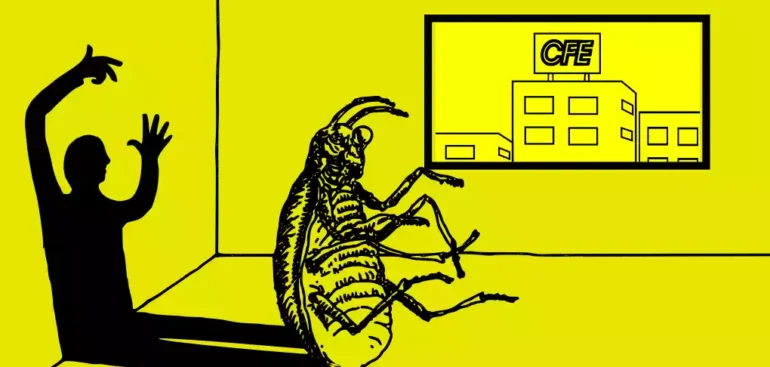
A common concern in times of confinement due to the Covid-19 pandemic is that suddenly CFE has raised energy prices. Although in previous months an X amount equivalent to energy consumption was paid, this has tripled and in some cases quadrupled, without the quantity consumed having increased proportionally. But, I am sorry to disappoint you, on this occasion it is not CFE’s fault, but rather ignorance of the tariff model and the consumption of our homes.

In Mexico the electric tariff of domestic users is controlled, this means that, even if there were a provider different from CFE, it would charge us practically the same. The energy reform sought to open the electric market but not all users have the opportunity to choose their supplier; only large industrial users or large commercial chains. These are called qualified users.

You and I, domestic users, enter into the second category, basic users. The idea is that there would be a type of user with a controlled and flat tariff so that they would always pay the same in their electricity bill and that, eventually, they could change provider by becoming qualified users or be represented by a load aggregator.

The idea of this is that we could play with our consumption and, in some cases, pay less than the controlled or protection tariff. How? For example, if I know that I will leave the city for two weeks, I know that I can pay a lower amount of energy; if I charge my cellphone and computer in the hours of lower demand, my consumption can be lower.

But this that I am telling you is, precisely, the reason behind why many people complain today about exorbitant energy prices. In Mexico, the tariff is tiered, this means that the kWh you consume in the first tier are much cheaper than those of the second tier and those of the third tier, much, but much, more expensive than those of the second tier.

This means that if before you consumed 75 kWh of energy per month, but you and your family spent time away, at school, the office, the cinema or the gym, a relatively low bill always arrived. However, in Mexico City, for example, each additional kWh after 75 costs twice as much as the first 75. In turn, each additional kWh after 140 kWh will cost three times more than the first 75.

By spending more time at home, energy consumption has grown.

In times of confinement, then, people spend more time at home, with the television on, the computer, the lights, the microwave oven; the washing machine, the heating or the air conditioning. The average consumption of households has doubled and this implies that they pay two or three times more because the level of subsidy provided by the State is exhausted.

What can we do? Know your consumption patterns and your appliances. For example, a baby bottle sterilizer consumes 750 W. This means that, using it 15 minutes twice a day in a month, you will consume a little more than 11 kWh —15% of the subsidized tariff in Mexico City. A television consumes 100 W, so having it on 12 hours a day would represent 36 kWh per month, half of your electric subsidy in Mexico City. By the way, if you have any normal 100 W bulb, it is spending the same as an LED TV. What are you waiting for? Change it.

For this reason, in times of pandemic, it is most likely that your consumption has increased and your electric bill comes higher. So be careful with consumption because you could move to the feared Domestic High Consumption tariff, of which I will tell you on another occasion.


This article was originally published by Business Insider México.
Date: October 21, 2020
Original Link: https://businessinsider.mx/cuidado-con-el-consumo-de-energia/ [offline]
Archived Link: https://web.archive.org/web/20240804051440/https://businessinsider.mx/cuidado-con-el-consumo-de-energia/ [Archived]

What Happened to Nuclear?


“The next energy miracle is nuclear energy”

– Bill Gates

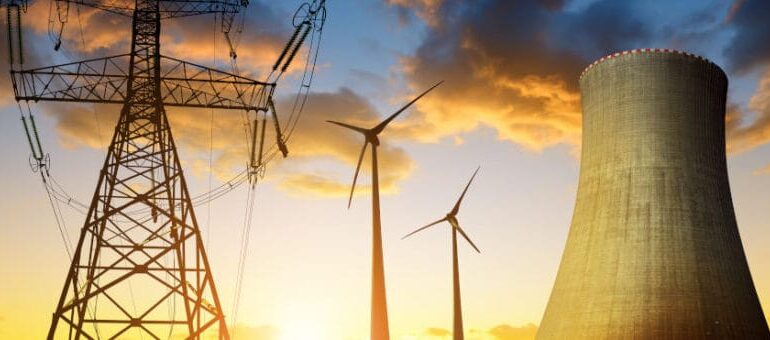
Back in the 1950s, nuclear energy was the promise of a bright future based on cheap and non-polluting energy. But the dream was cut short, mainly because of the bad press derived from catastrophic events such as Three Mile Island in the United States in 1979 and Chernobyl, in Soviet Ukraine in 1986.

Despite this, nuclear plants maintain the lowest rate of deaths and greenhouse gas emissions per energy generated among thermal technologies. That is to say that generation with coal, oil, natural gas and even hydroelectric plants have caused more accidents and deaths per unit of energy generated.

The nuclear boom occurred between the 1950s and 1980s and practically stopped in 1988 only to decrease in the 2010s. In comparison, while the costs of renewable energies have decreased at dramatic speeds, more proven technologies such as combined cycle turbines or internal combustion engines have also improved their costs and efficiencies. The above mainly because innovation and technological development, as well as strong competition, have not stopped.

However, for nuclear power plants it has been 30 years and the leveled costs have remained practically at the same levels because the memory of nuclear accidents is there. And as the years passed, the technological development of nuclear plants stagnated.

Now then, it is worth pointing out that when we talk about nuclear plants, in general, there are two ways to generate electricity: atomic fission and atomic fusion. The first is the only one that has been developed commercially and it is of which we have been talking up to this point. The second, for its part, remains in development in the international community and represents the possibility of a second wind for nuclear power plants.

Nuclear fission is the generation of a massive amount of energy due to the division of an atom. The most common nuclear fuels are the isotopes uranium-235 and plutonium-239. In a nuclear plant, the kinetic energy released by these materials is converted into heat that heats a fluid, normally water, which becomes heat and moves a turbine that produces the energy.

Nuclear fusion, for its part, is the inverse process. A great amount of energy is generated by the union of two or more atomic nuclei to form a different atomic nucleus or other subatomic particles. Fusion reactions have much greater energy density than fission reactions and with this they can produce electricity with the same principle as fission.

Atomic fusion has advantages over nuclear fission, particularly in that it can generate greater energy and emit less toxic waste, lower radioactivity and the risks of an accident of similar magnitude to those of Chernobyl or Fukushima are lower, which is why the scientific community seeks to achieve an advance to produce clean and cheap energy through nuclear fusion.

But there is always a “but.” What stops the progress of nuclear fusion? As I pointed out at the beginning, since the scientific and technological development of nuclear energy stopped for almost 30 years, the budget has been insufficient and companies and governments have decided to focus on other areas such as renewables, storage and hydrogen. This makes it very unlikely that, in the future, we will see a commercially viable nuclear fusion power plant because time does not forgive and the promise of a nuclear future will remain only in those movies of the 1960s.


This article was originally published by Business Insider México.
Date: October 14, 2020
Original Link: https://businessinsider.mx/que-paso-energia-nuclear-plantas-nucleares-opinion-paul-alejandro-sanchez-energia-circular/ [offline]
Archived Link: https://web.archive.org/web/20240723112519/https://businessinsider.mx/que-paso-energia-nuclear-plantas-nucleares-opinion-paul-alejandro-sanchez-energia-circular/ [Archived]