
A New Generation of Consumers


“Many want the government to protect the consumer.

A more urgent problem is to protect the consumer from the government.”

– Milton Friedman

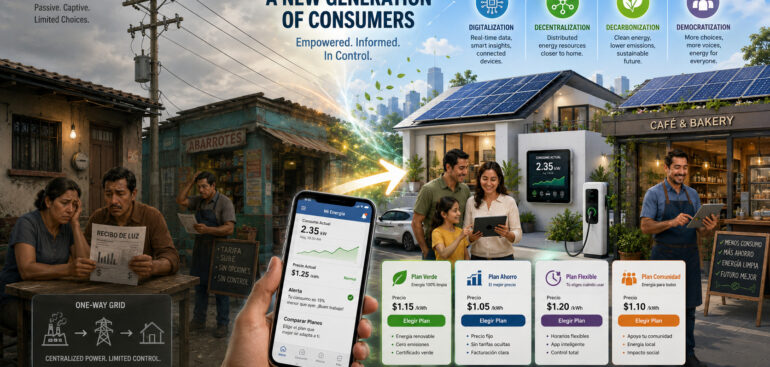
I dare say that in Mexico a consumer culture has not been developed in the energy sector, particularly in the electric sector; at least not at the level of domestic consumers or in small, family businesses and small shops. The citizens who make up the base of the pyramid of electric energy users.

Subsidies to energy prices together with a de facto monopoly in the sale of energy to small consumers, residential and commercial, have distorted the role of the consumer in the Mexican electric sector, which seems more like a captive taxpayer who has to obligatorily maintain the existence of operational and administrative inefficiencies of a market with a single electricity provider.

Small consumers do not have a real idea of their electricity consumption, nor of its real cost, and very few know the levels of energy efficiency of their household appliances and electronic devices.

In these days of confinement, most Mexican households have verified this situation in their electricity bills because by spending more time at home, our consumption has also increased in proportion. A person leaves a series running on TV while being on a video call with the lights on in an unoccupied room and charging a cellphone, laptop and tablet. Does it remind anyone of something?

While this happens in Mexico, in more mature markets such as the United States, Europe, Canada or Australia, a new generation of electricity consumers is being born that takes advantage of technological and social changes to have a more active role and assert its power. The four Ds that drive these changes are: Digitalization, Decentralization, Decarbonization and Democratization of energy. Which I will address in future columns.

This new generation of electricity consumers has indoor meters in their homes that allow them to observe the level of consumption in real time and the price of energy; they have connected smart devices that can regulate electricity consumption, for example in matters of indoor climate control; or schedule tasks, for example washing cycles, at 3:00 a.m. when the price of electricity is cheaper or dim the lights when no one is using them.

Additionally, there are applications for mobile devices that allow them to know consumption and establish limits and alarms, know the energy efficiency of the connected devices and observe their comparative degradation and know market prices. Some of them, more sophisticated, already integrate solar panels on their roofs, with storage systems and charging systems for electric cars, which are also storage systems.

But most importantly, these new-generation consumers have the right and control of choice in their hands. There are numerous electricity providers which offer electricity plans based on the needs of each of the users. There are plans for almost every type of consumer.

Whoever wants to consume 100% renewable energy and obtain their compliance certificate, or whoever wants to reduce their demand during peak hours in exchange for compensation; or whoever only operates on Saturdays and Sundays or at night, or whoever has their solar panels; all of them can obtain different offers from different providers with different prices and different characteristics.

For Mexicans to be able to enjoy an experience like that of mature markets, it is important that electric users become new-generation consumers who take control of choice and demand from rulers changes to move in that direction. We are still far away, but this evolution cannot be stopped.


This article was originally published by Business Insider México.
Date: July 8, 2020
Original Link: https://businessinsider.mx/una-nueva-generacion-de-consumidores-electricidad-opinion-paul-alejandro-sanchez-energia-circular/ [offline]
Archived Link: https://web.archive.org/web/20200805222332/https://businessinsider.mx/una-nueva-generacion-de-consumidores-electricidad-opinion-paul-alejandro-sanchez-energia-circular/ [Archived]

Cryptocurrencies and Energy


In the last two decades we have lived through an accelerated process of digitalization that has radically transformed traditional industries that are intimately linked to physical goods. People have stopped having albums filled with printed photographs to be replaced by thousands of digital photographs stored in the cloud or saved on a social network. We can say the same about tapes, compact discs, books, magazines and media outlets.

Perhaps there are hundreds of cases that can exemplify how some of the most traditional material expressions of past eras have been transformed into chains of digital information that are interpreted by computers, tablets and smartphones, but and, although money has not yet been digitalized, there are fiduciary currencies, which are completely digital and do not have the backing of the state, called cryptocurrencies.

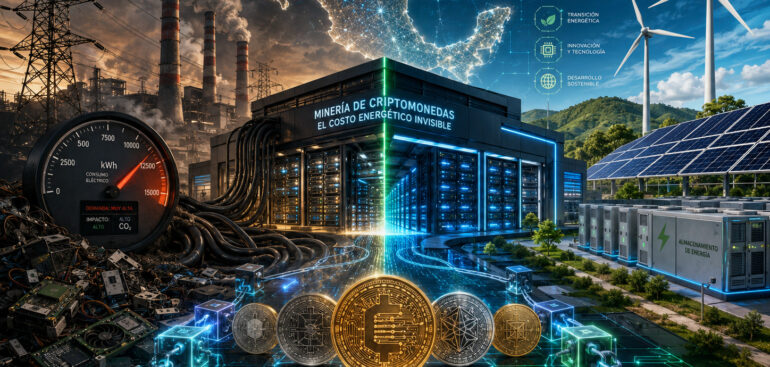
The best known is Bitcoin, but there are hundreds of cryptocurrencies with their own characteristics. These digital currencies carry out virtual mining processes that require large amounts of processing power and, therefore, generate a great demand for energy. It is expected that by 2020, the annual income of the industry will be $3,000 million dollars, while the associated expenses will be 2,994 million dollars. This means that more than 99% of income is used to cover costs, and more than 80% of the cost is the payment of electricity.

Consequently, cryptocurrency mining is an extremely energy-intensive activity in such a way that it has become a source of global concern regarding greenhouse gas emissions and the imbalances they generate in deregulated energy markets where the marginal costs generated by this mining can generate a sensitive loss of welfare for the rest of consumers or require the dispatch of more expensive and polluting sources of energy to cover demand.

According to data from Digiconomist, it is estimated that the electric consumption from Bitcoin mining in 2019 was 64 TWh, this is equivalent to one fifth of Mexico’s electric generation in the same year. To compare, the electric consumption of Bitcoin mining in the world was practically the same as the consumption of all electric cars that circulated in 2019 on the planet.

Due to the above, it is estimated that the emissions of equivalent Carbon Dioxide that were released into the atmosphere due to Bitcoin mining were 28.44 million tons and 9,740 tons of electronic waste were produced in the process, and this without considering other cryptocurrencies such as Ethereum, which in 2019 consumed almost 8 TWh, almost double the electricity consumed by all electric vehicles in the United States in the same year.

Nevertheless, the hope is that this problem is solved as more renewable sources and energy storage systems are integrated to sustain the intensive energy consumption in data mining and, at the same time, reduce the greenhouse gas emissions that today characterize the cryptocurrency industry internationally.

Although this could seem to be a phenomenon isolated to the cryptocurrency industry, perhaps in a not very distant future we could be witnesses to the digitalization of all national currencies, just as at the time paper money replaced commodity money, such as gold and silver coins, this could be replaced by digitally interconnected chains of data which, without a doubt, will require a different energy model.


This article was originally published by Business Insider México.
Date: June 24, 2020
Original Link: https://businessinsider.mx/opinion-paul-sanchez-consumo-energiamineria-criptomonedas-dana-medio-ambiente/ [offline]
Archived Link: https://web.archive.org/web/20200805215859/https://businessinsider.mx/opinion-paul-sanchez-consumo-energiamineria-criptomonedas-dana-medio-ambiente/ [Archived]

What NASA Can Teach CFE

"They were building a Ferrari for every launch when a Honda Accord could get the job done."
— Elon Musk

On May 30, the first private space mission was launched by Elon Musk’s company SpaceX, whose founder is also known for creating Tesla. The mission carried two NASA astronauts to the International Space Station. The launch represented the first crewed spaceflight departing from the United States in nearly a decade and what some have called the beginning of the private space race. Can this teach us any lessons for CFE?

It would be difficult to imagine an area more strategic for a government than its space program, particularly when that program is closely tied to an arms race and ideological competition under the perceived threats of the Cold War. As such, it received substantial public funding to sustain its operations.

However, in the more than sixty years since its creation, the world has changed dramatically in political, economic, and social terms. The welfare state model gradually became strained, largely because of the growing resources required to sustain government structures, and with it came a reduction in the amounts governments could devote to strategic sectors.

For example, NASA’s budget declined from USD 43.554 billion to USD 22.559 billion between 1966 and 2020 (in constant 2014 dollars). As a result, the agency was forced to retire some of its most emblematic programs, including the crewed Space Shuttle Program, which operated for thirty years from 1981 to 2011. In total, the program completed 135 missions, each with a launch cost ranging from USD 450 million to USD 1.5 billion.

The most important lesson from the launch of SpaceX’s Dragon spacecraft is that it cost approximately USD 50 million, only about 10 percent of the cost of the least expensive NASA Space Shuttle launch. As a result, NASA has decided to become one of the company’s principal customers for transporting astronauts into space.

In other words, NASA continues to carry out strategic activities in the space sector while concentrating its resources and efforts where they can generate the greatest value for the country and the world, such as the remote exploration of Mars, Jupiter, and Saturn, as well as deep-space exploration through its satellites. At the same time, it leaves launch services to private companies that can perform them more efficiently and at lower cost.

Viewed in this way, CFE could learn a great deal from NASA by focusing on the strategic areas that generate the highest value per unit of investment, such as transmission, distribution, telemetry, natural gas transportation, and natural gas marketing, among others. At the same time, it could move away from volumetric electricity generation targets that require the continued operation of expensive, inefficient, and highly polluting plants fueled by fuel oil and coal. Such generation could instead be replaced by low-cost clean and renewable energy, such as that procured through the Long-Term Electricity Auctions, benefiting both public health and consumers’ wallets.

Who knows? Instead of continuing to repair the legendary Volkswagen Beetle with a Ferrari-sized budget, perhaps CFE could accomplish far more for all Mexicans, just as NASA has done.


This article was originally published by Business Insider México.
Date: June 3, 2020
Original Link: https://businessinsider.mx/lo-que-la-nasa-puede-ensenarle-a-cfe-opinion-paul-alejandro-sanchez-energia-circular/ [offline]
Archived Link: https://web.archive.org/web/20210117004053/https://businessinsider.mx/lo-que-la-nasa-puede-ensenarle-a-cfe-opinion-paul-alejandro-sanchez-energia-circular/ [Archived]