Blackouts and the Lagging Grid

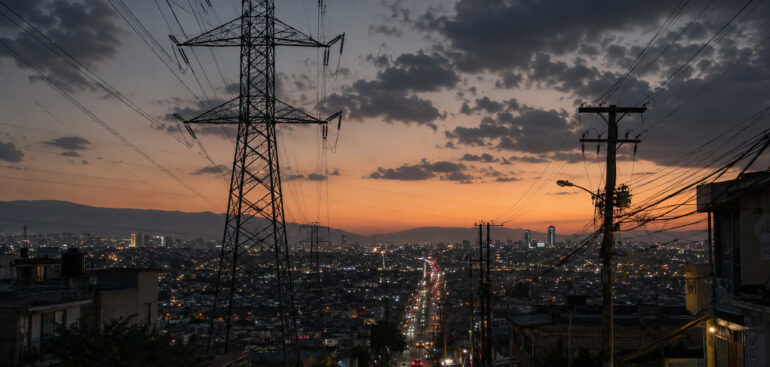
During June 2026, interruptions, voltage fluctuations, and power outages were reported in at least 20 states. The government insisted that they were not blackouts because generation capacity existed, although the explanation confirms the most important problem in the system. Mexico can produce electricity and still fail to deliver it when the transmission and distribution networks become saturated.

The 2013 reform started from two lags: power plants were lacking and the grid was lacking. Electricity generation was opened to competition and attracted private developers willing to build new capacity. Transmission and distribution remained strategic activities of the State because they are natural monopolies. Duplicating lines, substations, and circuits to create competition would be inefficient, while a single operator can take advantage of economies of scale if it is subject to regulated tariffs, open access, and clear expansion obligations.

CFE thus received an activity protected from competition, with relatively stable revenues coming from the use of the grid by public and private power plants. Those resources were supposed to recover investment, operation, maintenance, and depreciation, in addition to financing new projects. The public monopoly made economic sense as long as financial stability was transformed into additional capacity to bring electricity to users.

The previous administration shifted that priority toward the ownership of power plants. It allocated around 6 billion dollars to purchase existing plants and restricted new private projects, while grid projects accumulated delays. The framework derived from the 2024 constitutional reform consolidated that logic by establishing that the State must maintain 54% of generation, although that percentage does not determine whether a substation is saturated, whether a transformer can withstand the load, or whether a city can receive energy during a heat wave.

The problem appears more clearly in summer. Average demand may grow moderately, but the grid must respond to the peak in consumption that occurs when thousands of households and businesses simultaneously turn on air-conditioning equipment. That pressure is concentrated in specific regions, schedules, and circuits, especially in distribution. Having power plants available in another area of the country does not solve a local constraint when lines, feeders, or transformers are lacking.

Binding planning should focus on that infrastructure, where the State is irreplaceable. Recent calls showed that there is private interest in building generation, but in the grids, no one can replace public execution. Artificially maintaining a State participation of 54% addresses a discussion about ownership, while expanding transmission and distribution addresses the real reliability of the system.

When temperatures fall toward autumn, interruptions will decrease and so will political attention. The pressure will return next summer, probably with higher nighttime demand and higher temperatures. By then, the system will be evaluated by the lines, substations, and transformers that have effectively entered into operation and not by the amount of sovereign energy that makes up the country’s electricity supply.


This article was originally published by La Prensa OEM.
Date: July 19, 2026
Link: https://oem.com.mx/la-prensa/analisis/opinion-por-paul-alejandro-los-apagones-y-la-red-rezagada-31171733 [Online]

U.S. Oil Extraction in the Gulf Surpasses Mexico’s

According to the latest data from the U.S. Energy Information Administration, in the month of April U.S. oil production broke a record, reaching 13,934 thousand barrels per day (mbd). After the conflict with Iran, the country not only positioned itself as the largest oil producer in the world, covering a large part of the production losses of Middle Eastern countries such as Saudi Arabia, Kuwait, the United Arab Emirates, and others.

One of the producing areas that also broke a record is the offshore Gulf of Mexico in U.S. territory. For the first time, U.S. offshore production exceeded 2,100 mbd. Taking 2016 into account, production increased by more than 600 mbd in less than 10 years.

This takes on particular relevance because during the same period, in Mexico, production has fallen significantly. In 2015, Mexico’s offshore production was 1,768 mbd, according to the latest public record; by the beginning of 2026 it was already around 1,100 mbd. This is precisely close to 600 mbd less in less than 10 years in the Gulf of Mexico.

Production on both sides of the border has practically reversed, and at the core there is an institutional issue. In 2015, Mexico was launching the oil rounds as a result of the 2013 constitutional changes; in 2018 the last of them took place, even before the new administration of López Obrador took office. The new policy promoted by the administration would be to bet on Pemex, and in recent years the bet has not produced the expected results.

By contrast, in the United States more than 20 bidding rounds have been carried out in the Gulf of Mexico for oil concessions, in addition to one in March of this year, and the next one will take place next August; the plan continues periodically to tender 27 more between now and 2040.

The difference is not minor. While Mexico suspended the mechanism that allowed the incorporation of new operators, capital, and technology, the United States maintained a continuous schedule to develop its resources in the Gulf of Mexico. Not all bidding rounds become immediate production, nor are all projects successful, but they do generate a permanent portfolio of opportunities. In a long-term industry, that continuity matters.

Mexico’s problem is not only that it produces less oil. The problem is that it stopped building the conditions to produce more in the future. Pemex remains a central company for the country, but it faces financial, operational, and technological limitations that are not resolved through political discourse alone. Betting everything on a single company, in a high-risk industry with high investment requirements, reduced the room for maneuver precisely when the country needed to expand it.

The comparison in the Gulf of Mexico clearly shows the result of two different decisions. The United States increased its offshore production by an amount similar to what Mexico lost, while on one side there was institutional continuity, bidding rounds, and new projects, and on the other a concentration of decisions that failed to stop the decline. The maritime border not only separates oil-producing territories, it also shows two different ways of converting resources into production.


This article was originally published by La Prensa OEM.
Date: July 10, 2026
Link: https://oem.com.mx/la-prensa/analisis/opinion-paul-alejandro-la-extraccion-de-petroleo-de-eu-en-el-golfo-supera-la-de-mexico-31043965 [Online]

Pemex and Petrobras: Beyond Political Affinity

Petrobras and Pemex signed a memorandum of understanding on Tuesday in Rio de Janeiro to cooperate in exploration, production, and industrial processes. The gesture can be read as a political signal between two close governments, headed by Lula da Silva and Claudia Sheinbaum, but the underlying question is not whether Brazil and Mexico share a state-oriented sensitivity regarding energy, but why Petrobras comes to the table as a company with international muscle, corporate discipline, and exportable technology, while Pemex arrives seeking capabilities that it lost or never fully managed to consolidate.

The difference is not that Petrobras has ceased to be state-owned. The Brazilian Government retains control of the common shares and, therefore, decisive influence over the company. The difference is that this control coexists with a market structure that imposes checks and balances. Common and preferred shares listed on the stock exchange, a broad base of private investors, corporate governance rules, committees, compliance standards, and a board with independent participation are among the characteristics of the Brazilian oil company. After the trauma of Lava Jato, Petrobras strengthened internal controls, transparency, auditing, and decision-making processes that reduce the room for operating solely as an administrative arm of the Executive.

That architecture makes it possible to contain the political element. Although Petrobras continues to respond to national priorities, the company cannot completely ignore the cost of capital, the profitability of its projects, the reaction of the markets, or the evaluation of its partners. That is why its recent internationalization does not look like oil diplomacy, but rather a business strategy. In Colombia, it operates the Sirius gas project together with Ecopetrol. In Namibia, it took a stake in an exploration license together with TotalEnergies. In São Tomé and Príncipe, it has acquired offshore positions. In Ivory Coast, it is seeking deepwater blocks. In all these cases, Petrobras moves as a company that monetizes its main technological advantage, its experience in deep and ultra-deep waters.

The agreement with Pemex fits into that logic, covering deep waters of the Gulf of Mexico, mature fields, seismic reprocessing, refining, petrochemicals, fertilizers, gas, energy efficiency, emissions reduction, and lower-carbon-intensity fuels, among other related areas. For the moment, it does not commit investments or create a joint venture; it only opens an entry point to review data, measure returns, and evaluate whether there is a business opportunity.

That is the central difference between the two companies. Petrobras explores cooperation, but under viability filters; Pemex needs cooperation because its financial and operational margin remains narrow, and it seeks it in Petrobras because it is the option that political rhetoric allows. After years of opposition to the energy reform, the oil rounds, and the entry of major private oil companies, cooperating with a Latin American state-owned company, even though it increasingly operates with the logic of a private company, is more defensible than openly acknowledging the need for external capabilities.

The contrast is uncomfortable for Mexico because both countries claim energy sovereignty, but Brazil allowed its oil company to preserve scale, ambition, and business discipline within a market that continued to function. Petrobras did not grow isolated from the State, but rather in an environment where the ANP maintained oil rounds, competitive bidding processes, and rules for partnering with other companies in exploration and production. That institutional framework forced Petrobras to compete, partner, and justify capital.

Pemex, in contrast, carries the burden of fiscal pressure, debt, operational deterioration, and a narrative that confuses state control with industrial strength. Added to this is an energy reform that remained halfway completed and was politically dismantled before becoming institutionally consolidated, and that never fully translated into a new governance structure for the company. Yes, Mexico can learn from Petrobras, but signing memorandums is not enough. It must observe how a public company can act with the logic of a private company without denying its national origin. The lesson to be learned is how to shield it from decisions that destroy capital and reward projects capable of competing outside the budget.


This article was originally published by La Prensa OEM.
Date: July 4, 2026
Link: https://oem.com.mx/la-prensa/analisis/opinion-por-alejandro-sanchez-pemex-y-petrobras-mas-alla-de-la-afinidad-politica-30924435.html?app=true [Online]