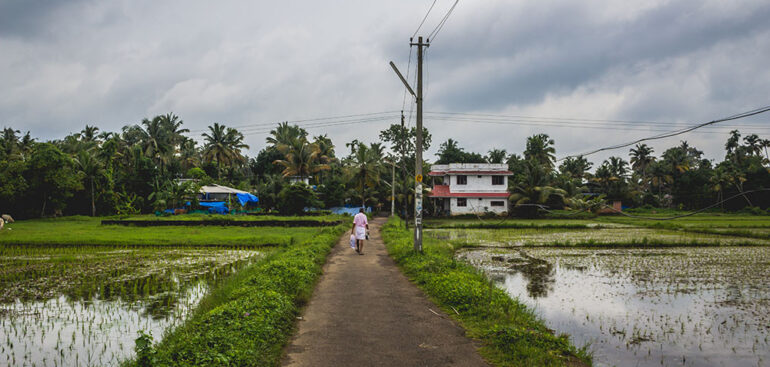
In recent years, the strong correlation between energy consumption and improvements in the quality of life of households and society as a whole has become increasingly evident. Today, children require computers, tablets, and internet access in order to receive an education that is both adequate and consistent with the standards of the modern world.
In this context, it is becoming increasingly common to hear about the importance of energy and the hardships faced by households and communities when they lack access to it, or when, despite having access, it is not affordable and optimal consumption creates additional challenges. So, where do we begin? Perhaps by first understanding what poverty is, how it is measured in Mexico, and what insights emerge when we combine these two elements.
Mexico was a pioneer in introducing the concept of multidimensional poverty in Latin America through the creation of the National Council for the Evaluation of Social Development Policy (CONEVAL) in 2006 and the implementation of the National Household Income and Expenditure Survey in 2008. Prior to that, poverty in Mexico was reported from a one-dimensional perspective that considered only the income of Mexican households and families.
At that time, three poverty lines were established to classify poverty nationwide: food poverty, capability poverty, and asset poverty. The first assessed whether income was sufficient to provide adequate nutrition; the second, whether it was sufficient to cover food needs as well as health and education requirements; and the third, whether it could also cover expenses related to clothing, housing, and transportation. When income was insufficient, households were considered to experience food, capability, or asset deprivation.
However, beginning in 2008, poverty in Mexico started to be measured using a multidimensional approach that considers the place where people live, their income level, and the availability of infrastructure, services, and basic rights to which a given family has access. Regarding income, CONEVAL established two poverty thresholds: moderate poverty and extreme poverty.
For extreme poverty, the minimum monthly income thresholds for June 2020 were established at MXN 1,640.00 and MXN 1,170.92 for urban and rural localities, respectively. Income below these levels is considered extreme income poverty. For the same period, the minimum monthly income thresholds required to avoid moderate income poverty were established at MXN 3,202.64 and MXN 2,086.57 for urban and rural localities, respectively.
Nevertheless, multidimensional poverty, as noted above, goes beyond income and includes the enjoyment of six basic rights or services: education, health, social security, food, housing, and access to basic services. Access to basic services includes water, sanitation, electricity, and cooking fuels within the household.
Therefore, in Mexico, a household is not considered poor if and only if its income is above the moderate poverty line and it experiences no deprivation in any of the six social dimensions mentioned above. If it has at least one deprivation but its income remains above the poverty line, it is considered a non-poor household with social deprivations.
Households experiencing moderate multidimensional poverty are those whose income falls below the moderate poverty line and who experience at least one social deprivation, while households in extreme multidimensional poverty are those whose income falls below the extreme poverty line and who experience at least three social deprivations.
When considering poverty and its relationship with energy, several related concepts emerge: energy poverty, energy access, energy marginalization, and energy vulnerability. Each of these concepts is related to the measurement of multidimensional poverty in Mexico.
For example, a family whose income exceeds the moderate poverty line may decide to move to a rural area located far from the electrical grid. As a result, it becomes a household experiencing deprivation because it lacks access to energy. It has the ability to pay, but it does not have access to energy. Consequently, lack of access to energy does not necessarily imply energy poverty.
In contrast, a household may have access to energy, but the cost of electricity, gas, and gasoline consumption may compromise other essential needs such as food, health care, education, or clothing. As a result, the household may choose to consume less energy than is optimal. In such cases, we may be witnessing energy vulnerability in terms of household economics or thermal comfort.
On the other hand, what happens when a household not only lacks sufficient income to support optimal electricity consumption but also lacks access to energy altogether? One could argue that such a situation goes beyond energy vulnerability and may be considered energy marginalization, as households in these circumstances are often forced to migrate from their communities of origin.
Perhaps we could begin by understanding energy poverty as a condition in which there is a lack, deficiency, or insufficiency of economic, technical, or social conditions necessary to access or maintain an optimal level of energy consumption that satisfies the essential needs for a household’s subsistence, development, and comfort.
Surely, especially if they are experts in the field, readers may find this definition insufficient for a topic of such importance to modern societies. Nevertheless, I believe it serves as a useful starting point for reflection and for encouraging debate on how to understand and assess energy poverty in Mexico and around the world. Perhaps in the future we will have the opportunity to explore this issue in greater depth here. For now, thank you for reading and sharing.
This article was originally published in Pensamiento Libre Magazine. ISSN 2007-5685.
Date: August 24, 2020
Original Link: https://www.revistapensamientolibre.com/single-post/2020/08/24/pobreza-energ%C3%A9tica-por-d%C3%B3nde-empezar [offline]
Archived Link: https://web.archive.org/web/20210613144455/https://www.revistapensamientolibre.com/single-post/2020/08/24/pobreza-energ%C3%A9tica-por-d%C3%B3nde-empezar [Archived]