“Artificial intelligence is the new electricity”
–Andrew Ng
Digitalization is a topic very intimately linked to energy, but it is necessary to differentiate the exogenous and endogenous effects of this relationship. The exogenous effects of digitalization have more to do with the process of transformation of goods, products or processes. We have already addressed this: how currencies, records and books become chains of digital data that ultimately require electric energy. For example, we no longer use the Guía Roji to locate ourselves but Google Maps, and today’s students no longer need to have an illustrated encyclopedia but only access to Wikipedia.
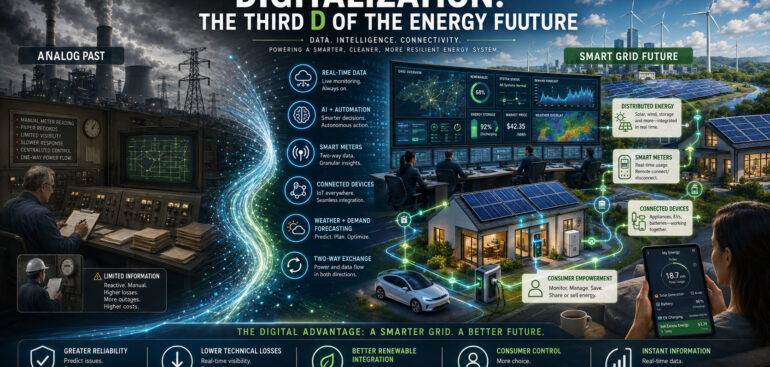
To the above is added the digitalization of classic household appliances and other electronics that are not only automated, but also interconnected to internet networks, giving rise to the so-called internet of things. Beyond devices to which we have already become accustomed — computers, video game consoles and televisions —, this is also a trend in washing machines, refrigerators, air conditioners and even lighting in general; everything can be controlled through networks with a cellphone or another device connected to the same network of our house or even remotely through the internet.
But, on the other hand, there are endogenous effects of digitalization in the electric sector. Digitalization in turn implies a process of adaptation and rapid response to a changing environment such as greater integration of renewable energies and storage. Power plants and large consumption centers are interconnected through remote communication means, whether through conventional internet or satellite communications, in such a way that they can process information in real time and integrate it into a more robust network with intelligent dispatch.
Operators and intelligent networks connected in real time, together with generators and representatives of consumers and other marketers, would have the possibility of sending more precise data on generation and consumption, which would avoid the programming of excess generation and would reduce technical losses. Likewise, it could help a better integration of renewable energies in real time and also make precise information available to citizens instantly.
Accompanying this interconnectivity goes hand in hand artificial intelligence and data science for the development of algorithms and self-learning machines that allow integrating a large amount of data in real time, such as weather, prices, operations, demand and storage, which would grant greater reliability in the operation of the electric system.
Additionally, consumption centers integrate smart meters and distributed generation and storage systems that can interact continuously with the network and enable the sale of solar or stored energy; controllable demand and other products for the benefit of the network. In case of non-payment, it also allows remote disconnection and connection without crews of technical bodies or long waiting times.
A smart home could decide whether at a given moment of the day it uses energy from the grid to store it or to charge an electric car; or else sell energy from a distributed generation system or share it with its neighbors or, why not, donate its surplus to a nursing home, church or school.
Digitalization and interconnectivity are, undoubtedly, two of the topics that reflect the bright future of the electric sector, decentralized and decarbonized, and this enables something else: democratized. We will talk about that next week.
This article was originally published by Business Insider México.
Date: July 29, 2020
Original Link: https://businessinsider.mx/digitalizacion-futuro-energetico-energias-renovables-opinion-paul-alejandro-sanchez-energia-circular/ [offline]
Archived Link: https://web.archive.org/web/20201026073748/https://businessinsider.mx/digitalizacion-futuro-energetico-energias-renovables-opinion-paul-alejandro-sanchez-energia-circular/ [Archived]