
Light Pollution


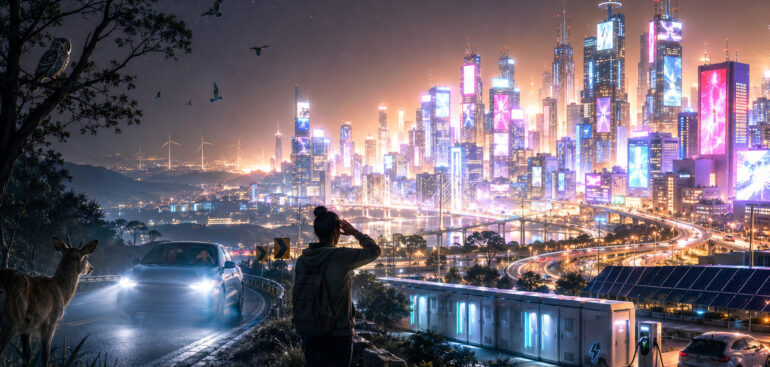
Let us position ourselves for a few minutes in the future, at a point in time where all the electric energy that is generated comes from renewable sources and where robust storage systems accompany the energy transmission and distribution networks. In that scenario, fossil sources are only used marginally in very specific cases, but the industry pales in comparison with the first decades of the twenty-first century.

The energy of this future has two characteristics: it is cheap and abundant and each additional unit does not increase the cost and, by practically not generating emissions, campaigns on energy saving have almost disappeared. It would seem that the only challenge ahead is the process of final disposal of first-generation storage technologies and solar panels that increase every year.

In this ideal world: can there exist a negative effect of an oversupply of clean and cheap energy? In this space I have proposed that even renewable energies could have a harmful effect on the environment if their use is not properly managed. One sample of this is light pollution, a problem increasingly palpable in modern societies.

The increase of light as a visual medium to transmit information has been possible because of two things: the low relative costs of electricity and the increase in energy efficiency in lighting technology.

In recent years, perhaps the greatest advance in energy efficiency has been in lighting. This has represented great savings for industries and businesses and has allowed more illuminated homes with less energy consumed; and it is that today an LED produces with 12 Watts light equivalent to a bulb of old that consumed 100 Watts and wasted an important part of energy in heat. This has generated savings between 80% and 90% in terms of electric consumption for lighting.

In such a way that this has allowed LED screens to be used for advertising and appear everywhere, which can have different effects on people from damage to sight to provoking epilepsies; or else they are barriers to free driving, since a strong light can provoke a decrease in the visibility of the environment.

Given this trend, it is common today to see roads, rivers, buildings, antennas and streets adorned with LED lighting, a trend that is estimated to grow in the coming years. Consequently, in our futuristic scenario, societies are destined to become permanent Broadways or Times Squares —in New York— using lighting more and more for ornamental and advertising purposes, thanks mainly to the fact that energy costs would approach zero.

Without a doubt, the question could arise: Is this something really bad? Perhaps not, if light pollution is regulated adequately to mitigate the risk as much as possible.

However, I imagine that light pollution constitutes only the tip of the iceberg of a series of problems associated with a future of cheap renewable energies without emissions. If you have any idea about it, do not hesitate to share it with me to address it more thoroughly in this space.


This article was originally published by Business Insider México.
Date: September 23, 2020
Original Link: https://businessinsider.mx/contaminacion-luminica-energia-circular-opinion-paul-alejandro-sanchez/ [offline]
Archived Link: https://web.archive.org/web/20220818205334/https://businessinsider.mx/contaminacion-luminica-energia-circular-opinion-paul-alejandro-sanchez/ [Archived]

The Waste of the Future


With this installment we finish the trilogy of waste and refuse related to the energy sector and dominant technologies. Two weeks ago we entered into the public crisis generated by horse waste —urine, manure and corpses— in the great cities of the late nineteenth century and early twentieth century; and the previous week, we analyzed how the growth in the use of fossil fuels in the world has produced an increase in greenhouse gas emissions related to climate change.

The problem caused by horse waste was solved when the automobile became widespread and the use of fossil fuels increased as the main source of transportation in the world. In the near future, the use of fossil sources could be replaced by the generation and storage of renewables, but that could also bring with it the energy waste of the future.

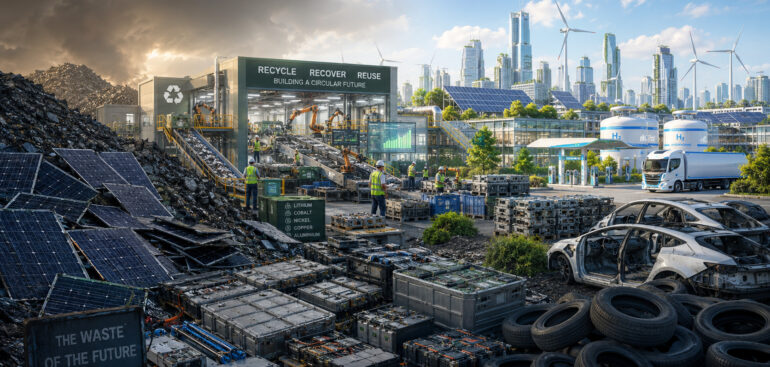
When the moment arrives, the proliferation of solar panels and batteries will be of such magnitude that, just like the horse in its time or greenhouse gas emissions, their final disposal can be a public problem of great importance.

Tons of waste of the future

Those solar panels that have been installed in recent years and those that are about to be installed could add up, by 2040, to 770,000 tons. This figure will increase as the roofs of the world become covered with solar panels; something that could be relatively fast, considering that the most important cities in the world have already begun to develop policies so that new constructions take advantage of their roofs to generate electric energy.

On the other hand, reaching the energy potential that renewable energies can release requires the development of storage on a large and small scale; this is batteries in generation plants, but also in buildings, businesses, industrial parks and homes.

Although there are many technological developments in the research and maturation stage, today conventional storage is carried out through lithium batteries that contain nickel, cobalt, aluminum, manganese and other components; in such a way that the batteries for cars and the electric sector that have been developed until now, and those that continue in the near future, can represent close to 7.8 million tons per year by 2040.

Given that one of the main costs of an electric car is the battery and its replacement can mean more expense —in terms of leveled investment— than buying another car, it is highly probable that the waste will not only be the batteries but the entire frame of the automobile, in addition to the fact that other legacy waste is not eliminated, such as tires.

A solution for the waste of the future

To solve these problems of the near future, two elements are required working jointly and in synergy:

  1. Policies for the final disposal of this waste in the present that responsibly address withdrawal in the future. That is, the responsibility of the producer and consumer must be extended in the present, in order to have the means of recycling, disposal and reuse in the future.
  2. Innovation and development to increase the useful life of technology and transition toward better methods of generation and storage of energy and transportation.

Who knows, perhaps another energy transition, there in the distant future, will allow us to change from solar generation, conventional storage and electric cars to a system based on hydrogen as an energy vector, storage and transportation. There is still a long way to go, but without a doubt, the energy future of the world will be surprising.


This article was originally published by Business Insider México.
Date: August 26, 2020
Original Link: https://businessinsider.mx/opinion-la-basura-del-futuro-paul-sanchez-columna-energia-circular/ [offline]
Archived Link: https://web.archive.org/web/20220928192656/https://businessinsider.mx/opinion-la-basura-del-futuro-paul-sanchez-columna-energia-circular/ [Archived]

The Waste of the Past


“If I had asked people what they wanted, they would have told me faster horses”

– Henry Ford

The waste and refuse of an era are associated with the dominant technology. That is, the waste of the past is not the same as the waste of the present and, rest assured, the waste of the future will have new characteristics that today are not analyzed in great depth. With this in mind, this week we open a series of three installments to analyze the waste, refuse and residues related to energy in the past, present and future.

To speak of the past, we will not go back to the ice age, but to the zenith of the energy model prior to the massification of internal combustion automobiles, between the end of the nineteenth century and the beginning of the twentieth century, when transportation powered by the muscle of animals dominated, particularly by horses.

The main source of energy of this means of transportation was, precisely, food and, of course, it required maintenance and particular spare parts, for example, the changing of horseshoes, medicine, water and an appropriate place for rest. As you can imagine, the main waste of that transportation system was the manure and urine of the horses that fell directly onto the streets and, of course, their corpses when they passed to a better life.

It is estimated that in New York more than 600 liters of urine and more than three tons of manure were poured per day. Additionally, each year more than 15,000 horse corpses were discarded per day, which represented a replacement rate of between 15% and 20% per year. In other words, demand was growing and so was the need to raise more horses.

This situation generated jobs and entrepreneurs did business. For example, the excess of urine required that the streets be washed several times a day and for this, carts were created that transported water with this function and government workers were in charge of washing the streets. For their part, organized manure collectors and depots appeared who charged for lifting and disposing of the waste. More than 20,000 horses and mules were used in New York for the tasks of collection and disposal of waste and street washing.

However, this mobility model also generated damage to health. It is estimated that in the 1900s, in New York, around 20,000 people died per year because of diseases related to horse waste that were transmitted through the air. Therefore, the collection and disposal of waste was fundamental.

Given the growth projections, most historians agree that the use of the horse was not sustainable in the long term for three reasons: the management of waste, the increase in the cost of horse food that was already becoming more expensive than coal and because of the methane emissions that would have been released into the atmosphere due to a world mobilized by horses.

On the other hand, coal was the primary energy source for thermoelectric generation, steam engines and mobilization by railroad and ships. Therefore, in addition to the environmental impacts in its extraction, greenhouse gas emissions were also generated. In such a way that the great industrial cities of the time were characterized by soot, black clouds and poor air quality.

Although today hydrocarbons have become the villains to defeat in order to mitigate climate change, their adoption in the first quarter of the twentieth century allowed a first energy transition that helped improve the management of manure and coal and more. We will analyze this next week. Until then.


This article was originally published by Business Insider México.
Date: August 12, 2020
Original Link: https://businessinsider.mx/basura-del-pasado-energia-circular-opinion-paul-alejandro-sanchez/ [offline]
Archived Link: No server is available to handle this request. [Archived]